Table of Contents
AI Summary
Can You Put Aluminum Foil in an Air Fryer? The Honest Answer
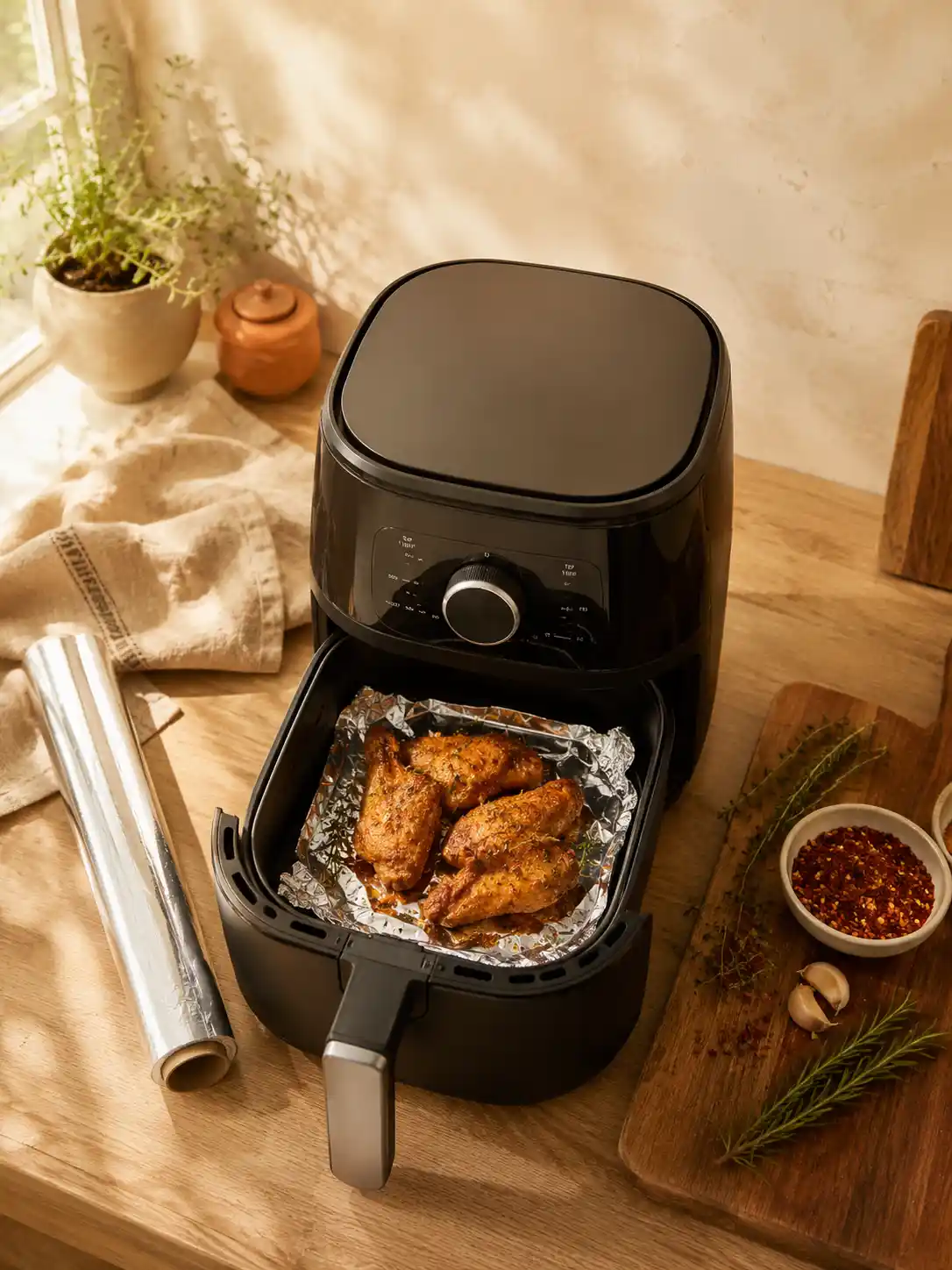
Yes, but with three specific rules that determine whether it's safe or a fire hazard. Here's what actually happens when you use foil in an air fryer, when it helps cooking, and the specific situations where you should never use it.
Air fryers are simple machines and most rules around using them are straightforward - except the aluminum foil question, which seems to confuse everyone.
The short answer is yes, you can. Most people are mixing up air fryers with microwaves in their head. Microwaves and metal don't mix because of how microwave radiation interacts with metal - sparks fly, fires start. Air fryers don't use radiation. They use hot air and a fan, like a small convection oven. And aluminum foil is perfectly safe in regular ovens.
But "you can" isn't the whole answer. There are three specific rules that determine whether foil is safe or whether it becomes a real hazard. And there are situations where foil actively makes your cooking worse, even when it's "safe." Let me walk through what actually matters.
The three rules that matter
Across every reliable source I checked - Food Network, Hamilton Beach's test kitchen, Martha Stewart, Aluminum Magazine, and several manufacturer guidelines - the same three rules come up consistently.
Rule 1: Foil only goes inside the basket, never under it or at the bottom of the unit.
The basket is where your food sits. Below the basket, in the main cavity, is where hot air circulates and where the heating element usually lives. Foil there blocks the airflow, prevents proper heat distribution, and in some models can directly touch the heating element. Both outcomes are bad - uneven cooking at best, melted foil and damaged appliance at worst.
When Hamilton Beach's consumer test kitchen manager Lynne Just talks about foil in air fryers, she's specific: "Lining the basket can help with drips and crumbs that fall through." Note the word "basket." Not "bottom of the unit." That distinction is the entire safety difference.
Rule 2: The foil must be weighted down by food.
Air fryers have powerful fans. If you put loose foil in an empty basket and turn the machine on, the fan will lift the foil. The foil can hit the heating element. This is the actual fire hazard people mean when they say "don't put foil in air fryers."
Per the Aluminum Magazine guide, this is "the single most important rule" - the foil must always be weighted down. Put your food on the foil, not foil on top of an empty basket. If the foil is held in place by the weight of chicken or fries or whatever you're cooking, it can't fly anywhere.
This also means: don't preheat with empty foil in the basket. Add the food first, then turn it on.
Rule 3: Don't use foil with acidic foods.
This one is less about safety and more about food quality. Acidic ingredients - tomatoes, citrus, vinegar, peppers, anything with significant acid content - react chemically with aluminum. Small amounts of aluminum can leach into the food, and the food itself can develop a metallic taste.
A 2012 study cited by The Environmental Blog found up to 2-6 mg of aluminum per serving in acidic dishes cooked with foil. For context, the WHO's safe weekly intake is roughly 140 mg for a 154-pound adult. One acidic foil-cooked meal isn't going to hurt you. Doing it daily for years probably isn't ideal.
If you're cooking tomato sauce, salmon with lemon, marinated chicken with vinegar, or anything similar, skip the foil. Use parchment paper or a bare basket instead.
When foil actually helps
Foil isn't required for air fryer cooking - most foods cook fine without it. But there are specific situations where it genuinely helps.
Fatty foods that drip a lot. Bacon, fatty chicken thighs, sausages, ground meat - these render fat that drips through the basket. The fat hits the bottom of the cavity and can produce smoke during cooking, plus it makes cleanup harder. A small piece of foil under the food catches drips at the source.
Small or delicate items. Things that might fall through the basket holes - pieces of fish, small vegetables, broken-up bacon - sit better on a piece of foil. The food stays intact, you don't lose pieces to the bottom of the unit.
Marinated foods with sticky glazes. Foods covered in honey glazes, BBQ sauce, or sticky marinades will bond to the basket coating if cooked directly. Foil prevents this and keeps the basket easier to clean.
Foods you want to wrap. Fish en papillote, baked potatoes wrapped to stay tender, food bundles where you want steam to build up - foil wrapping creates a sealed pocket that works similarly to oven cooking.
In each case, the goal is solving a specific problem (mess, sticking, falling through, steam-cooking) rather than using foil by default.
When foil makes cooking worse
There are also clear cases where foil makes your air fryer perform worse than it would without it.
Crispy foods. Wings, fries, breaded chicken, anything where you want the air fryer's signature crispness - foil under these foods blocks the airflow that creates that texture. The food cooks but comes out softer and steamier. The whole point of an air fryer is undermined.
Whole-basket lining. If you cover the entire bottom of the basket with foil, you've effectively turned your air fryer into a small toaster oven with no convection benefit. Hot air can't reach the bottom of the food. Cooking takes longer and quality drops.
Things that don't need it. Cookies, baked goods, dry foods that don't drip, vegetables that don't stick - there's no reason to use foil. It's an extra step that adds nothing.
The principle is simple: use foil when it solves a specific problem. Skip it otherwise.
How to actually use foil correctly
Putting all the rules together, here's the practical approach.
Tear a piece of foil that's smaller than the basket. Not the full size - you want airflow around the edges. About 1-2 inches smaller on each side.
Place the foil in the basket only, not in the bottom of the air fryer below the basket. If your model is the basket-and-drawer style, the foil sits in the basket where food goes.
Put the food directly on top of the foil. The food's weight holds the foil in place.
Make sure the food/foil combination sits well below the top of the basket, with clear space between it and the heating element above.
Don't cover the food with foil at the top, which would block airflow from reaching it.
Start cooking. The food cooks, the foil catches drips, the air still circulates around the edges.
When you're done, lift the foil out by the corners and dispose of it. Wipe the basket. Easier cleanup than scrubbing baked-on grease.
Better alternatives in some situations
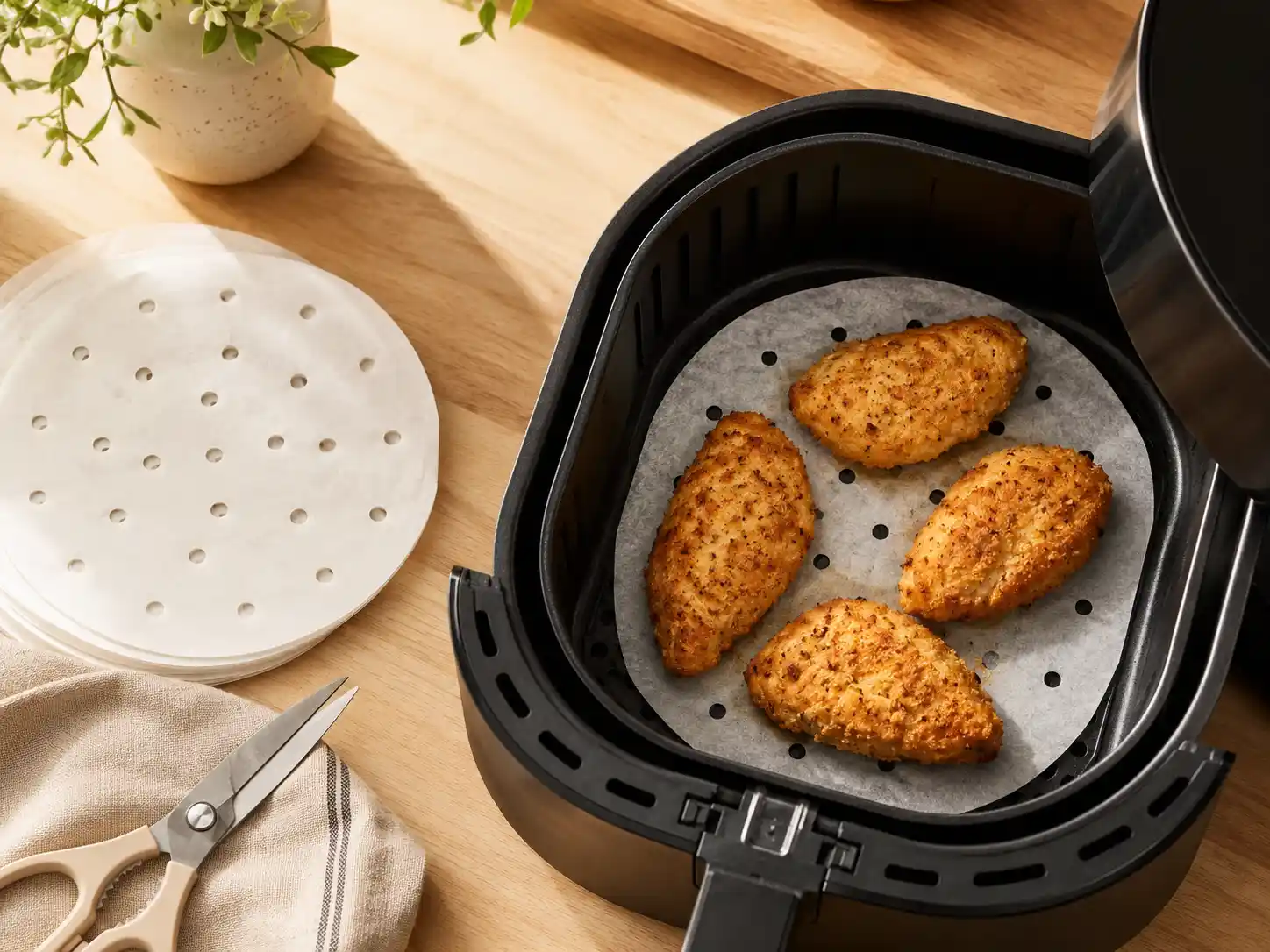
For most uses, plain parchment paper liners designed for air fryers are actually better than foil.
They're perforated, so airflow isn't blocked the way it is with solid foil.
They don't react with acidic foods.
They're inexpensive and disposable.
They're widely available at grocery stores and on Amazon for a few dollars per pack.
Silicone reusable liners are another option for people who want to reduce single-use materials. They cost a bit more upfront but last hundreds of uses.
Foil is good for catching drips from fatty foods and for wrapping specific items. For general "line the basket for easier cleanup" purposes, parchment liners do the job better.
Brand-specific guidance
A few brand notes worth knowing.
Philips and Ninja explicitly allow foil in the basket in their official documentation, as long as it's weighted down and doesn't block airflow.
Cosori generally permits foil with similar safety guidance.
Some smaller or budget brands explicitly say "do not use foil" in their manuals. These warnings exist usually because the brand can't guarantee safety across their range of models, not because foil is inherently impossible. But if your specific model's manual says no, follow that - it's a warranty question.
When in doubt, check your specific model's manual. It's typically a one-paragraph mention either confirming foil is fine or explaining why not.
Quick reference
Putting it all together, here's the decision tree.
You can use foil if: you're cooking a non-acidic food that's heavy enough to weigh down the foil, you place the foil only in the basket, and you leave airflow space around the food.
You should skip foil if: you're cooking acidic foods, the food is too light to hold foil down, your manufacturer manual says no, or you want maximum crispness.
You should use parchment paper instead if: you're doing general cleanup-easing, cooking acidic foods, or want better airflow than foil allows.
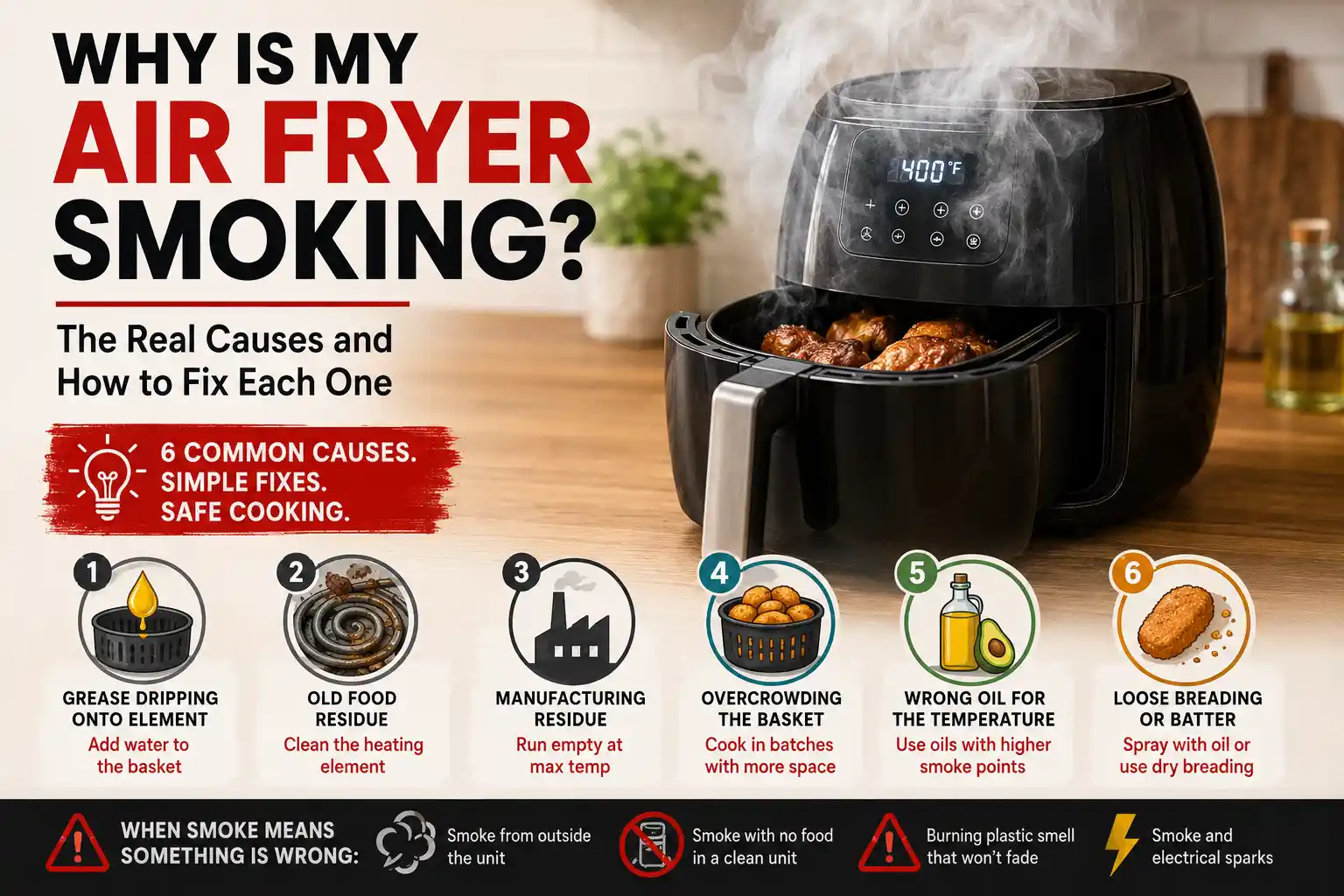
For more on cooking-related troubleshooting, our guide on air fryer smoking covers what to do when fatty foods produce smoke. For complete air fryer guidance, our full guide covers everything else.
Sources and further reading
The information in this article is based on the following sources:
- Food Network - "Can You Put Aluminum Foil In the Air Fryer?"
- Martha Stewart - "Can You Put Aluminum Foil in an Air Fryer? Here's What Experts Say"
- Hamilton Beach - Test kitchen guidance via Martha Stewart
- The Environmental Blog - "Aluminum Foil in Air Fryer: Safety, Health, and Cooking Tips"
- Aluminum Magazine - "Can You Put Aluminum Foil in an Air Fryer? (Right Answer)"
- Manufacturer documentation (Philips, Ninja, Cosori)
Always check your specific air fryer model's manual before using foil. Manufacturer guidance overrides general advice when they conflict.
Yes, as long as you follow three rules: foil only goes in the basket (never under the basket or near the heating element), it must be weighted down by food so it can't fly around, and you should avoid using it with acidic foods like tomatoes, lemon, or vinegar. Air fryers are convection ovens, not microwaves, so foil doesn't spark like it would in a microwave.
The bottom of the unit, below the basket, is where hot air circulates and where the heating element typically sits. Foil there blocks airflow, which can cause the unit to overheat and damage internal components. Foil should only go inside the basket where the food sits.
It can cause sparks, melting, or in worst cases a fire. The heating element gets to 400°F+ during cooking, and direct contact with thin aluminum is dangerous. This is the single most important rule - foil must never touch the element. Make sure foil is well below the top of the basket.
Avoid it. Acidic foods (tomato, lemon, vinegar, citrus, peppers) react chemically with aluminum and can leach small amounts of aluminum into your food. The amount is small but it also creates a metallic taste. For acidic foods, use parchment paper liners or a bare basket instead.
It can, if you use it wrong. Foil covering the whole basket bottom blocks the perforations and prevents hot air from reaching the food. The result is uneven cooking and less crispiness. Use foil only under the specific food that needs it, leaving the rest of the basket holes uncovered.
It depends on the brand. Philips and Ninja allow foil in the basket per their documentation. Some smaller brands explicitly say no foil at all. Always check your specific model's manual. If yours says no, follow that - using foil against manufacturer guidance can void warranty if damage occurs.
Parchment paper liners designed for air fryers are the best alternative. They're perforated to allow airflow, food-safe, and don't react with acidic foods. Silicone air fryer liners are another reusable option. For most cooking, a bare basket works fine with a quick spray of oil to prevent sticking.
No. With nothing weighing it down, the foil can blow up into the heating element and cause sparks or fire. Always add the food first, then place the foil under or around it, then start cooking. Never preheat an empty basket with foil inside.
Probably slightly. Aluminum exposure from cooking is generally considered low risk for most people, but it's higher with acidic foods and high temperatures. If you're cooking acidic foods or want to minimize aluminum exposure entirely, parchment paper or silicone liners are better choices. For most other cooking, foil is fine when used correctly.