Table of Contents
AI Summary
The Complete Guide to Air Fryers in 2026
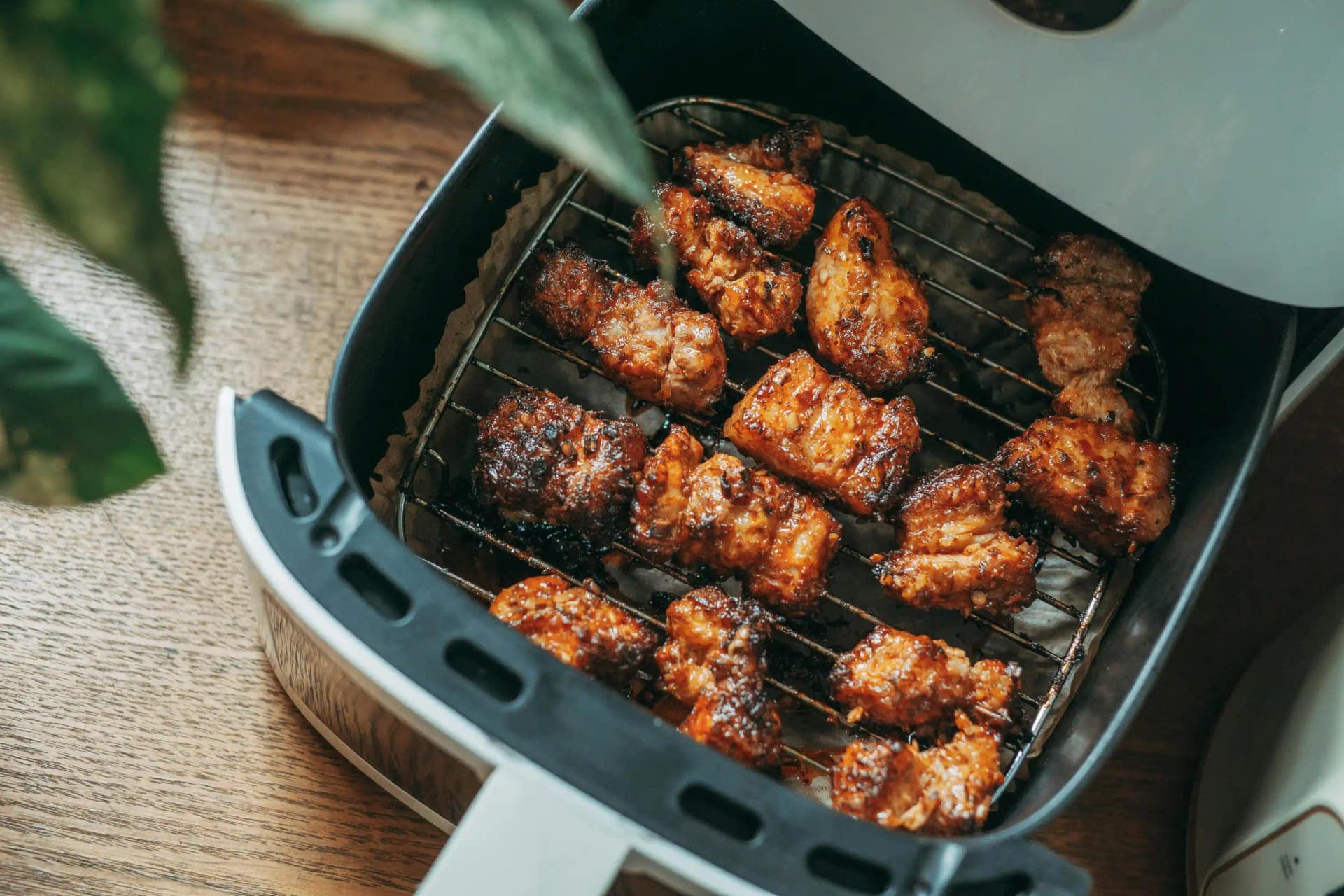
What an air fryer actually does, who it's for, what to buy, and the small annoyances nobody tells you about. After two years of using one almost every day, here's everything I wish someone had told me before I bought mine.
I bought my first air fryer in 2023. It sat on my counter for three weeks before I actually used it.
Part of that was because I had no idea what it did differently from the oven I already owned. Part of it was because the manual made it sound like rocket science. And part of it was that the box was huge, the inside was tiny, and I could not figure out why the basket smelled like burning rubber the first time I plugged it in.
That was almost two years ago. Today the air fryer is the appliance I use more than anything else in my kitchen. Not the toaster, not the microwave, not the stovetop. The air fryer.
If you're in that "should I get one of these" stage, or you already bought one and it's still in the box, this guide is the conversation I wish someone had had with me before I started.
What an air fryer actually is
Calling it a fryer is one of the great marketing lies of the last decade. There is no oil bath. Nothing gets submerged in anything. It's much closer to a small countertop convection oven with a fan that runs harder than a normal oven's fan does.
That's essentially the whole trick. Hot air, moving fast, in a small space.
The reason it cooks food differently from your regular oven is the small space. A standard oven has a big internal cavity. The heat is spread thin. An air fryer pushes that same heat into a much smaller volume, which means food gets blasted from every angle at once. Things that would take 35 minutes in the oven take 12 minutes in the air fryer. Things that turn out soggy in the oven turn out genuinely crisp in the air fryer.
You can replicate the effect in a regular convection oven if you crank the fan and use a smaller pan. But it takes longer, the result is usually less crisp, and you have to preheat the whole oven to do it. Most days I just don't have the energy for that.
Who actually benefits from one
I want to be honest about this part because air fryers are oversold.
If you cook for one or two people, an air fryer will probably change how you eat. Reheating leftover pizza, crisping up a piece of salmon, roasting half a sheet of vegetables - these are weeknight tasks that the air fryer does faster and better than the oven, with less cleanup.
If you cook for four or more people, the math is different. Most baskets max out somewhere between 4 and 6 quarts, which sounds like a lot but really isn't once you start spreading food in a single layer. You'll end up cooking in batches, and at that point you might as well use the oven.
If you mostly heat up frozen food - fries, chicken nuggets, frozen vegetables, the kind of stuff that goes in the freezer aisle - yes, get an air fryer. It is genuinely better than an oven for this category of food. It's also better than a microwave because nothing gets sad and rubbery.
If you mostly cook from scratch, do a lot of stovetop cooking, or live somewhere with a really small kitchen, you might want to think harder. An air fryer takes up real counter space. Mine is roughly the size of a small bread machine. That's not nothing.
The two basic shapes
Walk into any store selling air fryers and you'll see two shapes. There are basket models, which look like a tall plastic bucket with a handle and a drawer that pulls out. And there are oven-style models, which look like a small toaster oven with a glass door on the front.
I've used both. They cook food roughly the same way. The differences are in the details.
Basket models are simpler. You pull out the drawer, dump in the food, push it back in, set the time, and wait. Cleanup is one piece. They take up less counter space because they're tall and skinny. The downside is you can't see what's happening inside without pulling the drawer out, which interrupts the cooking. And the cooking surface is small - usually round, which is awkward for things like sandwiches.
Oven-style models are more flexible. They have a glass door, so you can watch food cook. They're usually wider, which fits flatter foods like a whole pizza or a tray of cookies. Some come with rotisserie attachments and dehydrator settings. The downside is they take up much more counter space, the multiple racks and trays mean more cleanup, and they're often noisier because the fan is louder.
If you have a small kitchen and just want a thing that crisps food, get a basket model. If you have counter space and you want something that can replace your toaster oven entirely, get the oven-style.
What size you actually need
The size question is where most people overshoot.
Manufacturers list capacity in quarts, which is almost useless because nobody has an intuitive sense of what a quart of food looks like. Here's a more practical translation, based on actually cooking in different sizes:
A 2 to 3 quart fryer fits enough food for one person. One chicken breast. A small batch of fries. A sandwich's worth of toasted bread. If you live alone and you mostly reheat or cook simple meals, this is plenty.
A 4 quart fryer fits enough for two people, or one really hungry person. Two chicken breasts side by side. A full medium pizza if it's not too big. Enough roasted vegetables for a side dish.
A 5 to 6 quart fryer fits enough for three people, or two people with leftovers. A whole small chicken. A tray of meatballs. Enough wings to make game day actually work.
Anything above 6 quarts is for families of four or more, and at that point you should seriously consider whether an oven would serve you better.
I have a 4 quart and I almost always wish it were a little bigger. But I don't have the counter space for a 6, so I make peace with cooking in two batches when guests come over. This is a personal calculation. There's no right answer.
What to look for when buying
After two years of paying attention to this stuff, here's what actually matters and what doesn't.
Wattage matters less than people say. Most decent air fryers run between 1500 and 1800 watts. The difference between them is small in real cooking. Don't pay extra for a "high wattage" model unless you're cooking for a crowd.
Dishwasher-safe basket matters a lot. This is the one thing I would not compromise on again. The non-dishwasher-safe baskets are a daily annoyance. You will scrub baked-on grease off them by hand every time. Just spend the extra money.
A good display matters more than smart features. Wifi, app integration, voice control - I have never used any of these on any air fryer. What I use every day is the dial or button to set time and temperature. Make sure those are easy to read, easy to press, and don't reset every time you open the basket to shake the food.
Preset buttons are mostly for show. "Chicken wings 18 minutes 400 degrees" is a button that exists on a lot of air fryers. The actual time and temp you need depends on whether your wings are fresh or frozen, big or small, sauced or dry. The presets are starting points at best. You'll learn to ignore them.
Noise is real. Air fryers are not quiet. The fan that makes the whole thing work is also what makes the sound. Some models are louder than others. If you have an open-floor-plan kitchen and you'll be cooking while someone watches TV in the next room, this matters. Look for models with noise ratings under 60 decibels if you can find that info, though most brands don't publish it.
Avoid the cheapest model on Amazon. I learned this the hard way. The really cheap ones - under 50 dollars - tend to have weak fans, inaccurate thermostats, and that plastic smell that never fully goes away. The sweet spot is roughly 80 to 130 dollars for a basket model that will last several years.
The plastic smell, and other first-week problems
Nobody tells you about the plastic smell.
When you first plug in a brand new air fryer, the inside is going to smell like a chemical factory for the first few uses. This is normal. It's the manufacturing residue burning off. It does go away.
The way to handle it: take the basket out, wash it with soap and warm water, dry it. Then run the fryer empty at the highest temperature for about 15 minutes. The first batch of air will smell terrible. Open a window, leave the kitchen, come back when it's done. The second cycle will smell better. By the third or fourth cycle, the smell is gone.
If the smell never fully goes away after a week of regular use, the unit is probably defective. Return it.
The other first-week thing is figuring out what "shake the basket" actually means. Some recipes will tell you to shake the basket every five minutes. This sounds tedious and you'll be tempted to skip it. Don't. The food at the bottom cooks faster than the food at the top because hot air, like all air, moves around obstacles. Shaking redistributes everything so it cooks evenly. If you skip it, half your food is burnt and half is undercooked.
The exception is anything with a coating you don't want to break. Breaded chicken, anything with a glaze, wet batters. For those, just flip them halfway through with tongs.
Cleaning, the real way
The internet is full of cleaning hacks for air fryers. Most of them are unnecessary.
After every use: pull out the basket, wipe it with a damp cloth or stick it in the dishwasher. That's it. Don't let things sit. Cooked-on grease is much harder to remove after it's cooled.
Once a week, or whenever it starts to smell: take everything apart and actually wash it. Wipe down the inside of the unit with a damp cloth. Don't use soap on the heating element area - water and soap don't belong near electrical components. Just a damp cloth and patience.
Once a month, look at the heating element on the top of the inside cavity. If you see grease buildup or charred bits, take a soft brush and gently clean it off. This is the thing that produces the burning-plastic smell when it's neglected. Most people never do this. Most people's air fryers eventually smell weird because of it.
Don't put metal utensils in the basket. The non-stick coating scratches easily, and once it's scratched, it starts coming off in your food. Use silicone or wood.
What it's actually good at
Here's where I get specific. Two years of using mine, here's the food I make in it constantly:
Frozen french fries. Better than the oven, faster than the deep fryer, no oil. 400 degrees, 12 minutes, shake at the halfway mark. Done.
Reheated pizza. The microwave makes pizza sad. The air fryer brings it back. 350 degrees for 4 minutes, and the crust gets crispy again.
Roasted vegetables. Brussels sprouts, broccoli, cauliflower, sweet potato cubes. Toss with a little oil and salt, 380 degrees for 15 minutes. Way better than the oven and three times faster.
Chicken thighs. Skin-on, bone-in chicken thighs at 380 for 25 minutes is one of the best things I make. The skin gets crackling crispy, the meat stays juicy. I've stopped roasting chicken in the oven because of this.
Salmon. 400 degrees, 8 minutes for a thick filet. The outside gets a little crust, the inside stays just done. Easy weeknight dinner.
Bacon. Hear me out. Air fryer bacon is the best bacon. The fat drips into the bottom, the strips don't curl up, and there's no splatter cleanup. 380 degrees for 8 to 10 minutes depending on thickness.
Reheated leftovers in general. Anything that was once crispy and got soggy in the fridge - pizza, fried chicken, fries, breaded things - will get its texture back in the air fryer. The microwave cannot do this.
What it's bad at
It's also worth being honest about where the air fryer fails.
Anything with a wet batter. Wet batter just drips through the holes in the basket and makes a mess. Tempura, fish in a beer batter, donut batter - these need a real fryer or a pan.
Cheese-heavy dishes that aren't already cooked. Melted cheese drips through the basket too, and then burns on the heating element, and then your kitchen smells like burnt cheese for a day. Use a small pan or parchment if you really need to.
Foods that need to be steamed or boiled. Obviously. But also things you might not think of, like rice or pasta. Stick to the stovetop.
Big batches. We covered this. If you need to feed five people, the air fryer will frustrate you.
Delicate herbs. Anything that's mostly leaves - parsley, basil, fresh dill - will get blown around by the fan and either burn against the heating element or end up scattered everywhere. Stick to woody herbs like rosemary and thyme.
Is the upgrade from a regular oven worth it?
If you already have a working oven, an air fryer is an addition, not a replacement. You'll still use your oven for big roasts, baked goods, casseroles, and anything that won't fit in the basket. The air fryer covers the things the oven is bad at - fast meals, single portions, getting things actually crispy.
For most people in apartments or smaller homes, this combination works really well. For people who already cook a lot and have well-stocked kitchens, the air fryer might just become the appliance they reach for first.
For people who almost never cook, an air fryer is not going to magically make you cook more. I want to be clear about this. The marketing for these things often implies that buying one will transform your relationship with food. It won't. If you don't currently make dinner regularly, you'll probably use the air fryer twice and then it'll sit on the counter.
What I'd buy if I were starting over today
If I were buying my first air fryer right now in 2026, knowing what I know after two years:
I'd get a 4 to 5 quart basket-style model from an established brand. Not the cheapest one. Not the most expensive one. Something in the 90 to 120 dollar range from a brand that's been making them for at least five years.
I'd make sure the basket and tray were dishwasher safe. I'd make sure the controls were physical buttons or a dial, not a touchscreen, because touchscreens get coated in cooking grease and stop responding.
I'd skip every smart feature. App connectivity, voice control, recipe libraries, none of that.
I'd put it on the counter where it would actually live, not in a cabinet I'd have to dig it out of every time. If it's hard to access, you won't use it. The whole value of an air fryer is being able to use it without thinking about it.
That's the real answer. The air fryer isn't a magical kitchen revolution. It's a small countertop oven with a strong fan. But it's faster than a regular oven, easier to clean, and good enough at certain things that you'll wonder why you didn't have one sooner.
For most people, that's plenty.
Most modern ones don't really need it. The cavity is so small that it heats up in under two minutes. If a recipe says to preheat, just add two minutes to the cooking time and skip the preheat. You'll barely notice the difference.
A decent one should last 4 to 6 years with daily use. The first thing that usually goes is the fan motor. The non-stick coating on the basket is the second. If you're really hard on it, you might replace the basket once during the lifetime of the unit.
Not from a properly working unit. The plastic smell on a brand new fryer is mostly harmless and fades quickly. If your fryer keeps producing strong chemical smells after the first few uses, something is wrong and you should stop using it.
Yes, this is actually one of the things air fryers do best. No need to thaw frozen vegetables, frozen fries, frozen chicken nuggets, or pretty much anything frozen. Add 2 to 5 minutes to whatever the cooking time would be for fresh food.
Less than your oven, because it cooks faster and the cavity is smaller. A typical air fryer uses about 1500 watts and runs for 10 to 20 minutes per use. That's significantly cheaper to run than an oven for the same meal.