Table of Contents
AI Summary
Why Is My Air Fryer Smoking? The Real Causes and How to Fix Each One
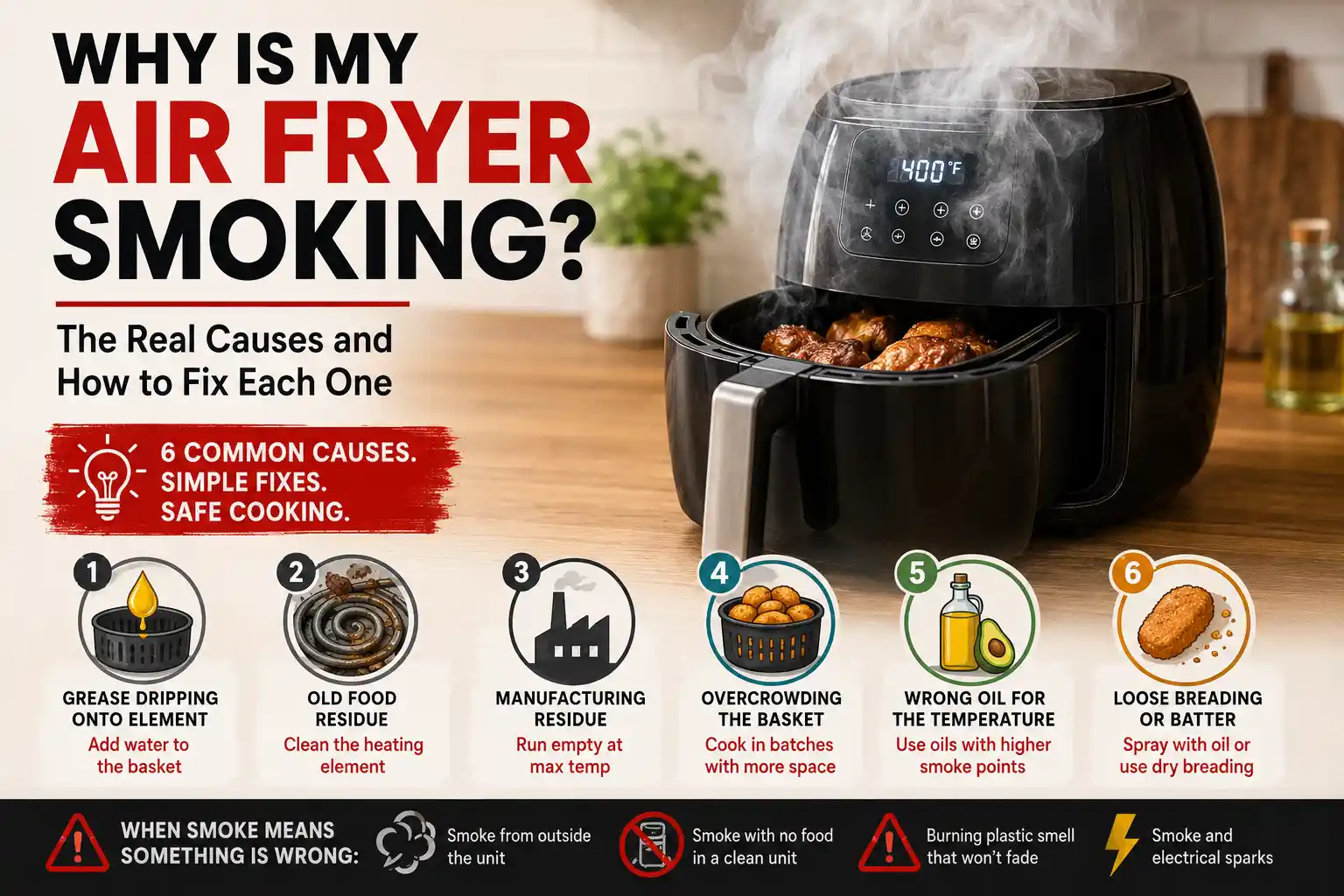
If your air fryer is producing smoke, something is happening that needs attention. Here are the six actual reasons it smokes, what each one looks like, and the specific fix for each - plus when smoke means something is genuinely wrong.
The first time my air fryer started smoking, I unplugged it and stood three feet away from the kitchen.
It looked like the apartment was about to catch fire. White smoke pouring out the vents, my smoke alarm one fan rotation away from going off, and the chicken thighs inside doing whatever chicken thighs do when their cook is being interrupted. After a minute of standing there confused, I figured out what had happened. Five chicken thighs at 400 degrees produces a lot of fat. The fat had dripped down, pooled in the bottom of the basket, hit the hot heating element, and started burning.
This is one of the most common air fryer problems people have, and the answer almost always falls into one of six categories. Each has a specific cause and a specific fix. Most of them are not actually dangerous - they're just annoying. But a couple of them mean something is truly wrong with your unit and you should stop using it.
Here is what's actually happening when your air fryer smokes, and what to do about each one.
Cause 1: Grease dripping onto the heating element
This is the most common reason by far. If you're cooking anything fatty - bacon, chicken thighs, sausages, fatty pork chops, hamburgers - the fat melts and drips down through the perforated basket. The element on top of the cooking cavity is sitting at 360-400 degrees. When liquid fat hits that, it instantly vaporizes into smoke.
The smoke is usually white or grayish. It starts a few minutes into cooking, around the time the food starts releasing its fat. You'll notice it most when cooking bacon, which is basically a fat-delivery system for your basket.
The fix is straightforward. Put about a tablespoon of water in the bottom of the basket before you start cooking. The water absorbs the dripping fat before it has a chance to hit the heating element. The fat sits in the water instead of burning. No smoke.
This water trick is genuinely one of the most useful air fryer tips that nobody mentions. It works for bacon, fatty chicken, sausages, anything that's going to render a lot of grease. The water evaporates harmlessly during cooking and your kitchen stays smoke-free.
For really fatty foods, you can also trim some of the excess fat before cooking. That cuts the problem at the source.
Cause 2: Old food residue burning off
If your air fryer was working fine yesterday and is suddenly smoking today, the most likely explanation is that there's residual food or grease from the last cooking session that's now burning.
Look at the heating element on the top of the cavity. If you can see charred bits of food, sauce splatter, or a brown grease coating, that's the source. When the element heats up to 360-400 degrees, that old material burns, and you get smoke.
The fix requires actually cleaning the unit. Unplug it. Let it cool completely. Take a damp cloth and gently wipe the heating element. For stubborn stuck-on bits, a soft brush or wooden skewer can help dislodge them. Do not use soap directly on the heating element - water and electrical components don't mix.
This is the maintenance step most people skip. The basket gets cleaned because food sits in it. The heating element gets ignored because it's tucked away at the top. Then six months later, the unit smells weird and smokes during cooking and people think their air fryer is broken. It isn't. It just needs the element wiped down.
Once a month, take a minute to clean it. It'll add years to the life of your unit.
Cause 3: Manufacturing residue (only on brand new units)
If your air fryer is new and smoking from the very first use, this is almost certainly manufacturing residue burning off. Manufacturers apply protective coatings during production and shipping. Those coatings burn off the first few times the unit gets to full temperature.
The smoke from this is usually less heavy than grease smoke, and it has a chemical smell - like burning plastic or paint. It's harmless but unpleasant.
The fix is to run the empty unit at maximum temperature for 15-20 minutes before cooking food in it. Open a window. Leave the kitchen. Come back when it's done. By the third or fourth run, the residue should be gone and the smoke should stop.
If the chemical smell never fully goes away after a week of regular use, the unit is probably defective. Return it.
Cause 4: Overcrowding the basket
This one surprises people. You might think you're being efficient by stuffing the basket full of food. But overcrowding actually causes smoke through a different mechanism than the grease problem.
When the basket is too full, hot air can't circulate properly. Instead of crisping the food, it steams the food. The food releases moisture. That moisture mixes with whatever fat is rendering. And the combination creates more smoke than properly-spaced food would.
The smoke from overcrowding usually starts a bit later in the cooking process, after the food has had time to release moisture. It's often accompanied by food that's not crisping properly - wet-looking instead of golden.
The fix is to cook in batches. I know it's slower. I know it's annoying. But two batches of properly-spaced food cook better than one batch of crammed-in food, and they produce less smoke. Single-layer cooking is the rule almost everyone underestimates.
Cause 5: Wrong oil for the temperature
Different oils have different smoke points - the temperature at which they start to vaporize and produce smoke. If you're using an oil with a low smoke point at high heat, you'll get smoke.
Common smoke points:
- Extra virgin olive oil: about 375°F (slightly below most air fryer cooking temps)
- Coconut oil: about 350°F
- Butter: about 350°F (and includes milk solids that burn)
- Vegetable oil: about 400-450°F
- Avocado oil: about 520°F (excellent for high heat)
- Refined canola oil: about 400°F
If you're cooking at 400°F and using olive oil or butter, you're operating at or above the oil's smoke point. The oil itself produces smoke.
The fix is to switch to an oil with a higher smoke point for high-temperature cooking. Avocado oil is the most heat-stable common option. Refined vegetable oil and refined canola oil work fine. Save the olive oil for finishing or lower-temperature cooking.
This is also why butter-based recipes often smoke more than oil-based ones. The milk solids in butter burn at relatively low temperatures.
Cause 6: Loose breading or batter blowing onto the element
This one is sneaky. If you're cooking breaded foods - chicken nuggets, breaded shrimp, anything coated - small particles of breading can become loose and get blown around the cavity by the fan. When those particles hit the heating element, they burn and produce smoke.
This is also true for wet batters, which are even worse because they drip through the basket and onto the bottom of the cavity, then burn.
The fix has two parts.
For loose breading: lightly spray the breaded surface with oil before cooking. The oil holds the breading to the food, reducing the amount that can fly around. A light spray, not a heavy coat.
For wet batters: don't use them in an air fryer. Tempura, beer batters, donut batters - these are not air fryer foods. They need a real fryer or a pan. Stick to dry breading in the air fryer.
When smoke means something is actually wrong
Most of the time, smoke is a cooking issue with a clear fix. But there are a few situations where smoke means your unit needs attention or replacement.
Smoke from the outside of the unit. If smoke is coming from the body of the air fryer itself, not the vents, something electrical is wrong. Unplug it immediately. Don't use it again until it's been inspected. This can indicate a damaged power cord, failed internal wiring, or a motor problem. None of those should be ignored.
Smoke with no food and a clean unit. If you run the air fryer empty after a thorough cleaning and it still smokes, something internal is wrong. This is usually a sign that the heating element itself is damaged or that wiring inside the unit has come loose. Time for warranty service or replacement.
Burning plastic smell that won't fade. New units smell like manufacturing residue for the first few uses. That smell should fade within a week. If it doesn't, the unit may be defective. Return it under warranty.
Smoke and electrical sparks. This is rare but serious. Unplug immediately, don't use again, contact the manufacturer.
The quick troubleshooting checklist
If your air fryer just started smoking, run through this checklist in order:
- Look at what you're cooking. Is it fatty? Add water to the basket bottom.
- Check the heating element. Is it dirty? Clean it.
- Is the unit new? Run it empty at max temp a few times to burn off residue.
- Is the basket full? Cook in batches with more space.
- What oil are you using? Switch to something with a higher smoke point.
- Are you cooking breaded food? Spray with oil to hold breading in place.
In most cases, one of these six things will be the problem. The fix is usually quick.
If none of these apply and the unit still smokes, the problem is probably the unit itself rather than what you're cooking. Stop using it and contact the manufacturer.
Smoke prevention from the start
Some habits dramatically reduce how often your air fryer smokes.
Clean the heating element once a month, even if it doesn't look dirty. Five minutes prevents weeks of frustration later.
Add water to the basket bottom anytime you're cooking high-fat foods. This single habit eliminates the most common cause of smoke.
Pat meat dry before cooking. Excess moisture creates more smoke and steams the food rather than crisping it.
Don't overcrowd. If you can't see the bottom of the basket through the food, you have too much in there.
Use oils with high smoke points (avocado, refined canola) for high-temperature cooking. Save olive oil for finishing.
Don't use wet batter in an air fryer. Use dry breading or skip the coating entirely.
These habits take very little effort but make a real difference. Most people who think their air fryer "always smokes" actually have one or two habits that are causing it. Adjust those, and the problem mostly disappears.
For more on what air fryers are actually good for and which models hold up over time, our complete guide to air fryers covers the broader picture. For models specifically built for everyday use without these kinds of headaches, our small-apartment guide and budget guide cover the picks that hold up.
For light grease smoke, usually yes. Open a window and finish cooking. If the smoke is heavy, smells like burning plastic, or you see any sparks, unplug immediately and don't continue. Smoke from electrical issues is different from smoke from cooking and requires immediate attention.
Bacon is one of the highest-fat foods you can cook in an air fryer. The fat drips through the basket and hits the heating element, where it burns and produces smoke. Add a tablespoon of water to the bottom of the basket before cooking bacon and the smoke usually stops.
Occasional smoke from cooking is harmless to the unit itself. Persistent smoke from residue buildup can shorten the life of the heating element over time. Regular cleaning prevents this.
Less than you think. Most foods need a light spritz or a teaspoon at most. Too much oil is one of the leading causes of smoke. The "fryer" name is misleading - these appliances do best with very little added oil.
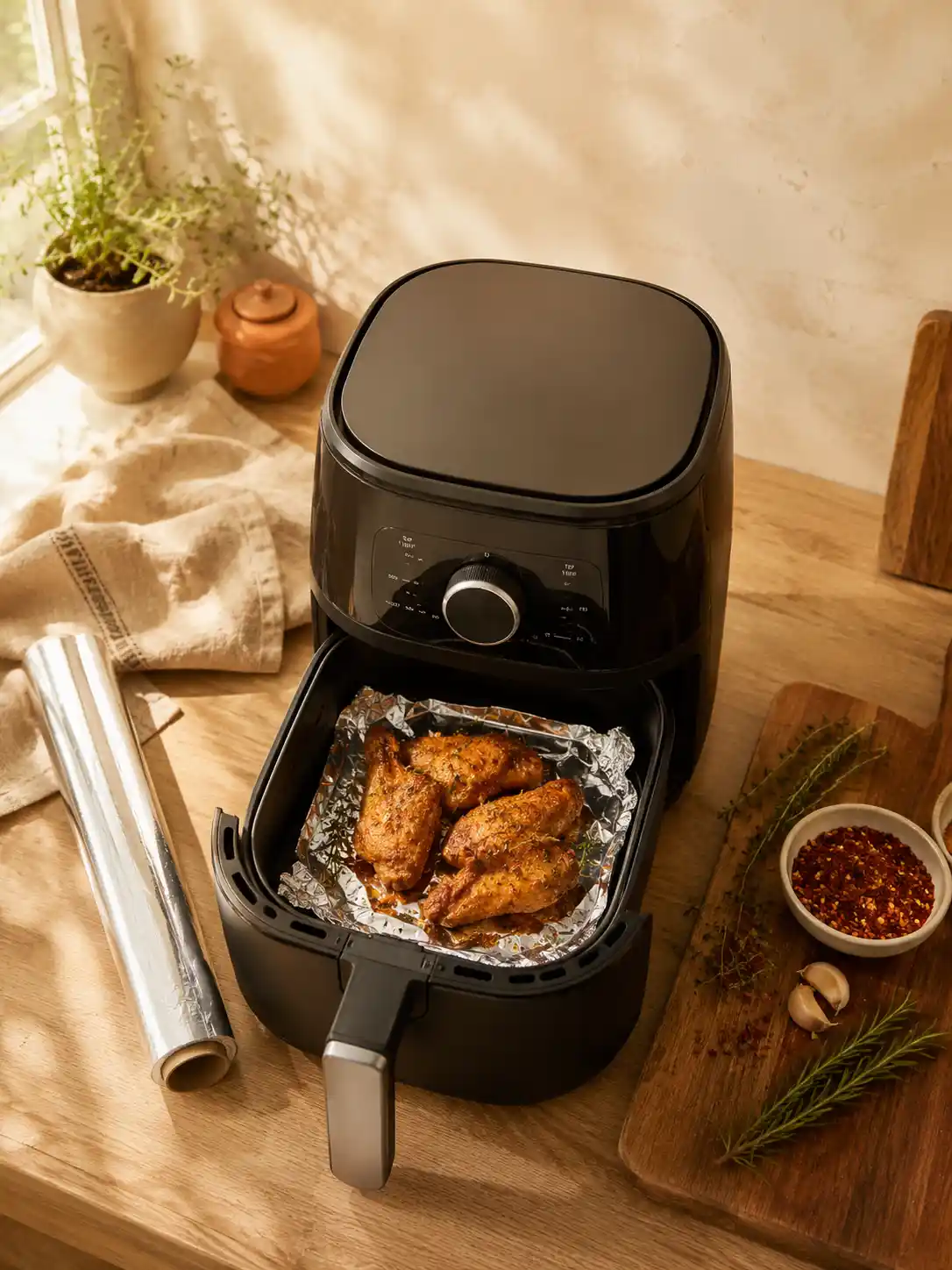
You can, but it needs to be weighted down by food so it doesn't get blown into the heating element by the fan. A small piece of foil under fatty food can catch drippings. Don't use foil on its own with no food on top.
Water trapped in cracks of the heating element area can produce steam (which looks like smoke) the first time after a thorough cleaning. This is harmless and stops quickly. Make sure the unit is fully dry before plugging it in.
Smoke from cooking food is not toxic, just unpleasant. Smoke from a new unit's manufacturing residue is generally harmless but should fade within a week. Smoke from an electrical problem (burning plastic, electrical components) is potentially toxic and means you should stop using the unit.
The most common reason is that the heating element wasn't cleaned, only the basket. The element on top of the cavity needs to be wiped down separately. Look up at the top of the inside of your air fryer - if you see grease or charred residue there, that's the source.