Table of Contents
AI Summary
Can You Put Parchment Paper in an Air Fryer? Yes, But Read This First
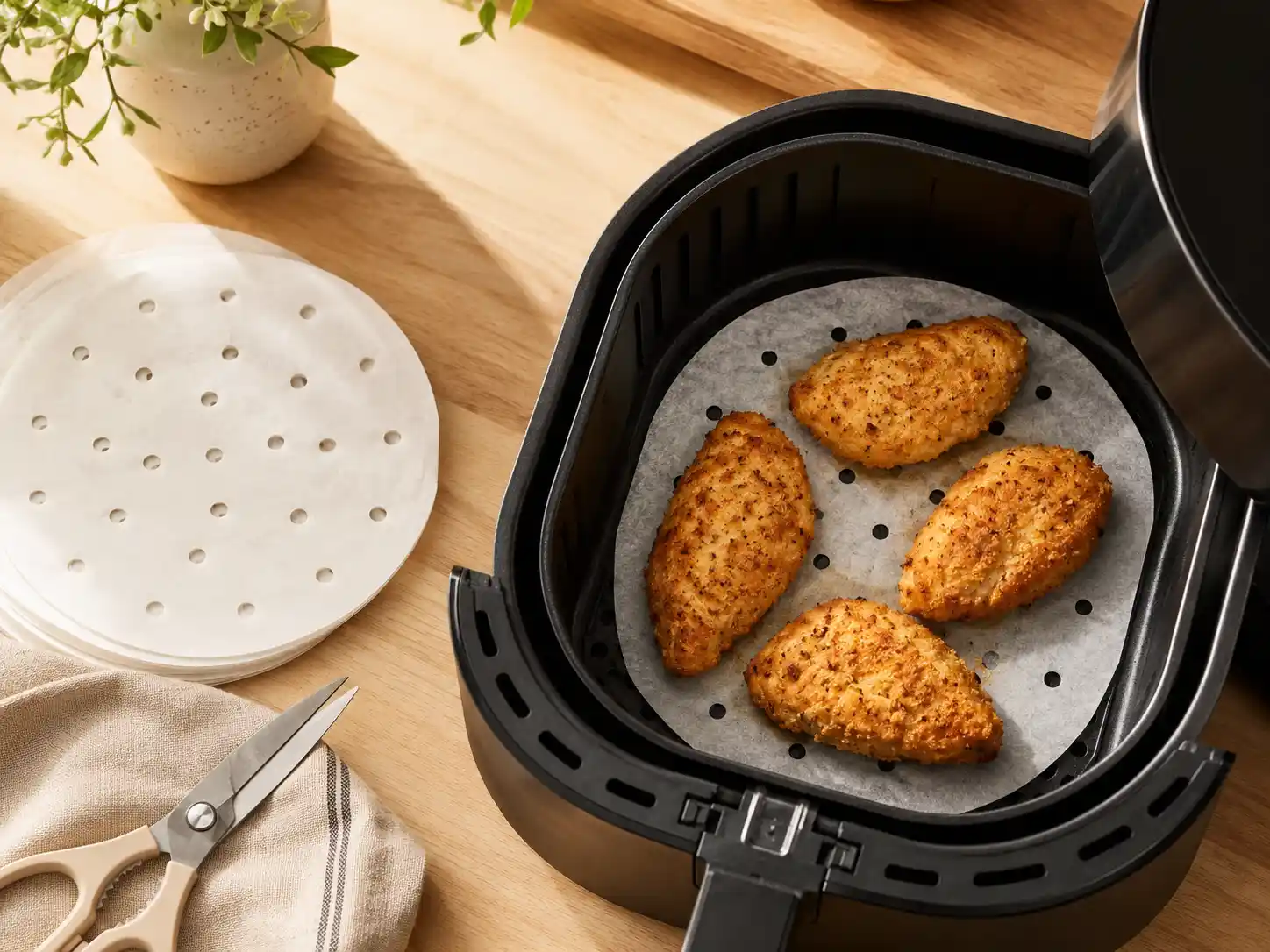
Parchment paper is safe in an air fryer - but only if you follow a few specific rules. Here's how to use it without creating a fire hazard, when it helps, and why perforated air fryer parchment is worth buying.
Yes, you can put parchment paper in an air fryer. It's oven-safe, non-toxic, and makes cleanup dramatically easier.
But there's a real fire hazard if you use it wrong, and the warnings aren't just liability-covering caution. Air fryers have powerful fans, and a loose sheet of parchment can get blown directly into the heating element, which is hot enough to ignite it. People have started small fires this way. So the "yes" comes with three specific rules that matter.
Let me walk through how to use parchment paper safely, when it actually helps, and why the perforated air-fryer-specific kind is worth buying over regular parchment.
The three safety rules
Across every reliable source - Martha Stewart, House Digest, and multiple air fryer guides - the same three rules come up. Follow these and parchment is completely safe.
Rule 1: Always weigh it down with food. Never run it empty.
This is the most important rule. As chef Rodgers explains in Martha Stewart's coverage, you should never use parchment in the basket if there's nothing holding it down, because the high-velocity fan will blow the parchment into the heating element and potentially start a fire.
Put the food on the parchment first. The food's weight holds it in place. Then start cooking. Never preheat with loose parchment in an empty basket.
Rule 2: Cut it smaller than the basket.
The parchment should sit flat on the bottom of the basket and stay below the level of your food. It should not reach up the sides of the basket where it could curl toward the heating element.
Cut it 1-2 inches smaller than the basket bottom on each side. This also leaves space for air to circulate around the edges. A liner that's too big can curl up toward the heat source as it warms.
Rule 3: Check the temperature rating.
Most standard parchment paper is rated for 420-450°F. Most air fryer cooking happens at 350-400°F, so you're usually within the safe range. But check your specific parchment's box - ratings vary by brand.
If you cook above 450°F (some air fryers reach this), use perforated parchment specifically designed for high-heat air fryer use.
That's the whole safety picture. Weigh it down, cut it small, mind the temperature.
Why perforated parchment is the better choice
Here's something most people don't realize until they've used solid parchment a few times: it blocks airflow.
Air fryers work by circulating hot air around the food. The bottom of the basket has perforations that let air reach the underside of your food. A solid sheet of parchment covering the basket bottom blocks those perforations. The result is less crispy food, especially on the bottom, and slightly uneven cooking.
Perforated parchment - paper with pre-punched holes - solves this. The holes let hot air circulate through to the food, maintaining the crispiness and even cooking the air fryer is supposed to deliver.
You can buy pre-cut perforated air fryer parchment liners inexpensively (they come in round and square shapes to match different baskets), or you can punch holes in regular parchment yourself with a hole punch.
For anything where you want crispiness, perforated is clearly better. For sticky or wet foods where crispiness matters less, solid parchment works fine.
When parchment paper actually helps
Parchment isn't necessary for most air fryer cooking. But it genuinely helps in specific situations.
Sticky or marinated foods. Honey-glazed chicken, BBQ-sauced wings, teriyaki salmon - these bond to the basket coating and are a pain to clean. Parchment prevents the sticking entirely.
Delicate foods that might break apart. Fish filets, breaded items, anything that could stick and tear when you try to remove it. Parchment lets you lift the food out cleanly.
Foods with cheese. Anything where melted cheese might ooze and weld itself to the basket. Parchment catches it.
Acidic foods. Unlike aluminum foil, parchment is non-reactive. Tomatoes, citrus, vinegar-marinated foods are all safe on parchment without any metallic taste or aluminum concern. This is parchment's big advantage over foil.
Easy cleanup generally. For any food, parchment means you lift out the liner and the basket stays mostly clean. Less scrubbing, longer basket coating life.
When to skip parchment
There are clear cases where parchment makes things worse.
Maximum-crispiness foods. Fries, wings, anything where you want the crispiest possible result - solid parchment blocks airflow and reduces crisping. Use perforated parchment or skip it entirely.
Very high-heat cooking. Above 450°F, standard parchment can scorch. Use perforated high-heat parchment or no liner.
Lightweight foods that don't weigh the parchment down well. A few small pieces might not hold the parchment securely. Make sure whatever you're cooking provides enough weight, or the fire risk returns.
Foods that need direct basket contact for browning. Some foods brown better with direct contact. Parchment creates a barrier that can reduce that browning.
Parchment paper vs aluminum foil: which to use
Since we covered aluminum foil in air fryers separately, here's the quick comparison.
Parchment is better for: sticky foods, acidic foods (no reaction), delicate items, and general non-stick cleanup. It's available perforated for airflow.
Foil is better for: catching grease from very fatty foods (bacon, fatty meats), wrapping foods to steam them, and molding into shapes.
For most general "line the basket for easier cleanup" purposes, parchment wins - especially perforated parchment. Foil's main advantage is catching drips from fatty foods and wrapping.
The one rule both share: weigh it down with food, never run empty.
How to use parchment correctly, step by step
Putting the rules together:
Preheat your air fryer empty (no parchment, no food).
While it preheats, cut your parchment to fit - smaller than the basket bottom, with space around the edges. Use perforated parchment if you have it, or punch a few holes in regular parchment.
When preheating is done, place the parchment in the basket.
Immediately put your food on top of the parchment to weigh it down.
Make sure the parchment sits below the food line and doesn't reach toward the heating element.
Cook as normal.
When done, lift out the parchment with the food, then discard the parchment. Don't reuse it.
One critical warning: parchment, not wax paper
This trips people up. Parchment paper and wax paper look similar but are completely different.
Parchment paper is coated with silicone, which makes it heat-resistant. Safe in air fryers (with the rules above).
Wax paper is coated with wax (paraffin), which melts and can smoke or catch fire at air fryer temperatures. Never safe in an air fryer.
Always confirm you're using parchment paper, not wax paper. Check the box. They're often shelved near each other in stores and the packaging can look similar.
The bottom line
Parchment paper is safe and useful in an air fryer when you follow three rules: weigh it down with food, cut it smaller than the basket, and respect the temperature rating (most parchment handles 420-450°F).
Perforated air fryer parchment is the better buy - it maintains airflow and crispiness that solid parchment blocks. It's cheap and available pre-cut.
Use parchment for sticky foods, delicate items, acidic foods, and easy cleanup. Skip it when you want maximum crispiness or you're cooking very hot. And never, ever confuse it with wax paper.
For the foil comparison, see our guide on aluminum foil in air fryers. For more on keeping your basket clean, our cleaning guide covers the full process. And our complete guide to air fryers covers everything else.
Sources and further reading
The information in this article is based on the following sources:
- Martha Stewart - "Can You Put Parchment Paper in an Air Fryer? Here's What to Know"
- House Digest - "Can You Put Parchment Paper In The Air Fryer?"
- The Air Fryer Insider - "Air Fryer Parchment Paper: Complete Safety Guide"
Always check your specific parchment paper's temperature rating on the box, and confirm you're using parchment (silicone-coated), not wax paper (which melts). Follow your air fryer manufacturer's guidance when it conflicts with general advice.
Yes, as long as you follow three rules: the parchment must be weighed down by food (never empty), it must be cut smaller than the basket so it doesn't reach the heating element, and it should be rated for the temperature you're cooking at (most parchment handles 420-450°F). Never preheat with loose parchment inside - the fan can blow it into the heating element and start a fire.
It can, but only if used incorrectly. The danger is loose parchment getting blown by the fan into the heating element, which is hot enough to ignite it. As long as food weighs the parchment down and it's cut to fit below the food line, it won't reach the element and won't catch fire.
No, never. This is the most common mistake. With no food weighing it down during preheating, the fan blows the loose parchment around the cavity where it can touch the heating element and ignite. Always preheat empty, then add the parchment and food together.
Most standard parchment paper is rated for 420-450°F. Since most air fryer cooking happens at 350-400°F, you're usually within the safe range. Always check your specific parchment's box for its heat rating, and if cooking above 450°F, use perforated parchment specifically designed for air fryers.
Yes, it's the better choice. Perforated parchment (with pre-punched holes) lets hot air circulate through to the food, which solid parchment blocks. This maintains crispiness and even cooking. You can buy pre-cut perforated air fryer parchment liners cheaply, or punch holes in regular parchment yourself.
Solid parchment can slightly reduce crispiness because it blocks airflow to the bottom of the food. Perforated parchment minimizes this. For maximum crispiness (fries, wings), skip parchment entirely or use perforated liners. For sticky or delicate foods, the small crispiness trade-off is worth the easier cleanup.
Parchment is better for most uses. It's non-reactive (safe with acidic foods like tomatoes and lemon, unlike foil), it's available perforated for airflow, and it's non-stick. Foil is better only for catching grease from very fatty foods or for wrapping items. For general liner use, parchment wins.
No, use a fresh sheet each time. Reusing parchment reduces its heat resistance and increases fire risk, plus it accumulates grease and food residue. Parchment is inexpensive - discard it after each cooking session and start fresh.
Never use wax paper in an air fryer. Wax paper is coated in wax that melts and can smoke or catch fire at air fryer temperatures. Only parchment paper, which is silicone-coated and heat-resistant, is safe. They look similar but are completely different - always confirm you're using parchment, not wax paper.