Table of Contents
AI Summary
The Complete Guide to the Ninja Creami in 2026
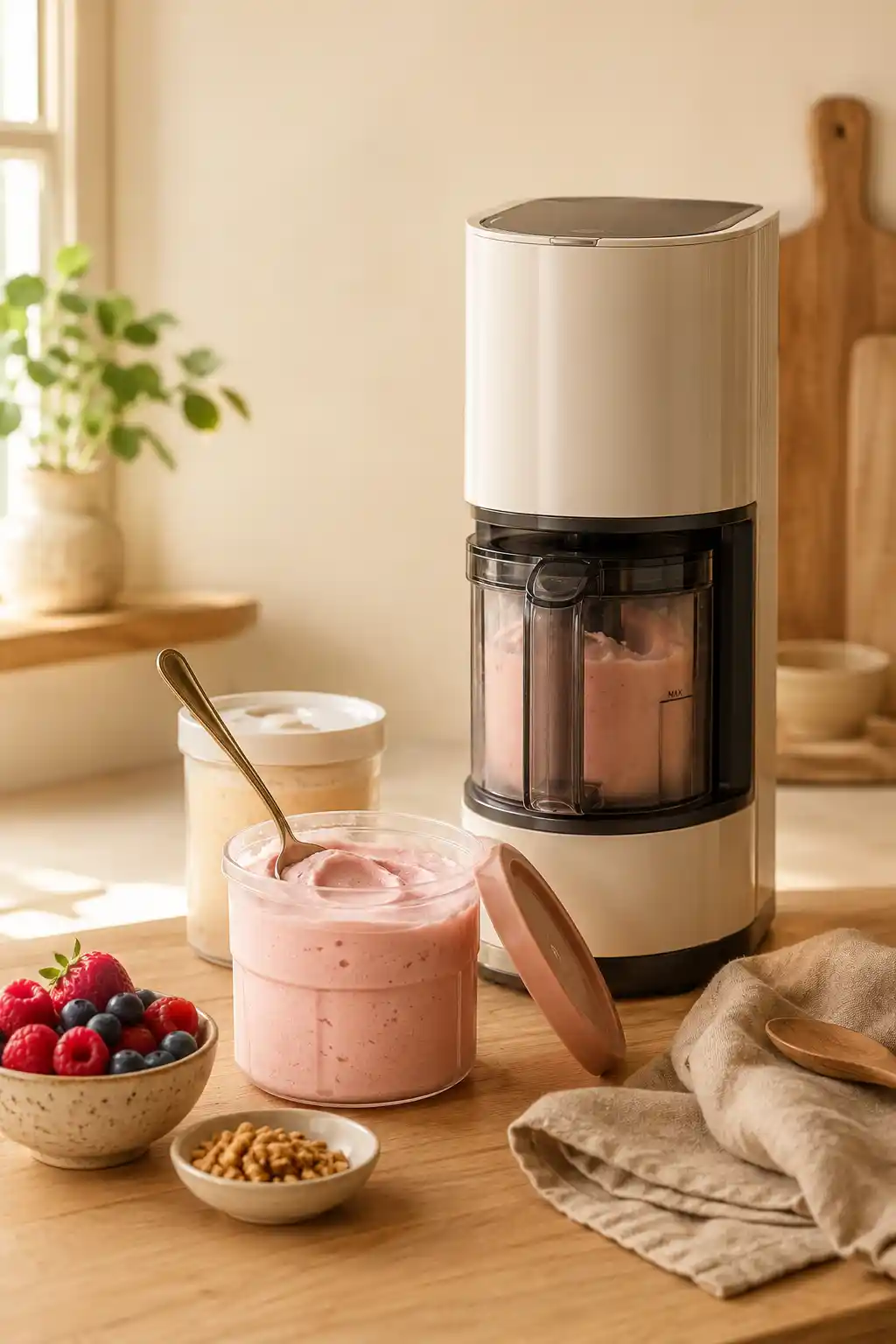
It's not a traditional ice cream maker - it's a texture processor that turns frozen blocks into silky ice cream, sorbet, and more. Here's exactly how the Creami works, what it can actually make, and whether it's worth the counter space.
The Ninja Creami looks like it should work the way every other ice cream maker does - pour in a mixture, let it churn, get ice cream. It doesn't. Understanding that difference is the key to actually liking this appliance.
The Creami has been one of the most talked-about kitchen appliances in the US for the past couple of years, driven heavily by a TikTok-fueled fitness trend around high-protein, low-calorie "ice cream" that actually tastes like the real thing. But social media hype and genuine usefulness aren't always the same thing, so here's what the Creami actually does, how it compares to a traditional ice cream maker, and what you should know before adding it to your counter.
How it actually works
Traditional ice cream makers churn a liquid base while it freezes. You pour a cold mixture into a pre-frozen bowl, and a paddle stirs continuously as the mixture slowly solidifies over 20-40 minutes, preventing large ice crystals from forming.
The Ninja Creami reverses that entire order. You prepare your liquid base - milk, cream, a protein shake, a fruit puree, whatever you're making - and pour it into one of the included pint containers. That container goes into the freezer and stays there for a full 24 hours, freezing completely solid.
When you're ready, the rock-solid frozen pint goes into the machine, covered with a lid that holds a metal blade called the Creamerizer Paddle. You select a program, and the machine spins the blade rapidly, boring down through the frozen block from top to bottom, shaving it into fine ice particles as it goes. Once it reaches the bottom, it reverses direction and blends everything on the way back up, turning what was a solid block of ice a few minutes earlier into a smooth, creamy, scoopable texture.
This is why "texture processor" is a more accurate description than "ice cream maker" - it doesn't freeze anything itself. All the freezing happens beforehand in your regular freezer. The Creami's entire job is transforming an already-frozen block into a creamy texture in a few minutes.
What you can actually make
The core functions are consistent across models: ice cream, a lighter lower-calorie ice cream setting, gelato, sorbet, milkshakes, smoothie bowls, and frozen yogurt.
The Deluxe model adds a few more: Italian ice, a creamsicle-style program, and frozen drink/mix-in functions for adding candy, cookies, or fruit pieces into a finished batch.
The real appeal isn't the variety of programs - it's ingredient control. Because you build the base yourself, the Creami is popular for versions of frozen treats that are hard to find pre-made: high-protein bases (often built around cottage cheese, Greek yogurt, or protein powder), low-sugar or sugar-free versions, dairy-free and vegan bases, and keto-friendly recipes. If you have specific dietary needs or goals, this is the Creami's biggest practical advantage over buying ice cream at the store.
Which model to buy
Three models are currently available, differing mainly in capacity and program count.
Ninja Creami (original), around $200. Seven functions, 16-ounce pint containers. This covers the core use cases well and is the sensible starting point for most first-time buyers who aren't sure yet how much they'll use it.
Ninja Creami Deluxe, around $250. Eleven functions, 24-ounce family-size tubs - noticeably larger batches than the original. Worth the upgrade if you're making dessert for a household rather than just yourself, or want the extra program variety (Italian ice, creamsicle, mix-ins).
Ninja Swirl by Creami, around $350. Thirteen functions, including a soft-serve dispenser function that the other two models don't offer. This is the pick specifically if you want soft-serve texture rather than scoopable - a genuinely different result, not just an extra program.
For most people trying the Creami for the first time, the original model is the reasonable starting point. Step up to the Deluxe if capacity matters to you from the start.
The 24-hour freeze, and why it matters
This is the detail that trips up first-time users the most: you cannot skip or shortcut the freezing step.
The base needs to freeze completely solid, all the way through, which takes the standard 24 hours in most home freezers. Freezing longer - even up to a couple of weeks - is fine and produces a properly solid block. Freezing for meaningfully less than 24 hours risks a partially frozen center, which processes unevenly (some parts too icy, others still liquid) and can put unnecessary strain on the machine's motor.
The practical implication: the Creami is not a same-day dessert appliance. You need to plan a day ahead, prepare your base, freeze it, and only then process it. If you want ice cream in the next twenty minutes with zero planning, this isn't the right appliance - a traditional churn-style maker or store-bought is faster for spontaneous cravings.
A quirk worth knowing about
Reviewers consistently mention that brand-new Creami units give off a faint burnt-plastic smell the first few times you use them. This isn't a defect and isn't coming from the blade touching your ice cream - the blade never contacts the sides of the pint containers, so there's no risk of plastic particles ending up in your food. It's attributed to the motor running at full power for the first time after sitting idle in the box. The smell reliably fades after several uses as the appliance breaks in.
Cleaning and maintenance
The pint containers and lids are generally dishwasher-safe (check your specific model's manual to confirm). The main housing with the motor should never be submerged - wipe it down with a damp cloth. Because the blade never contacts the container walls, there's minimal wear on that front compared to appliances with more moving parts touching food directly.
Is it worth buying?
Yes, for the right person - and no for another kind of person, which is worth being honest about upfront.
It's worth it if: you want genuine control over ingredients (especially for high-protein, low-sugar, dairy-free, or keto frozen treats), you don't mind planning a day ahead, and you'll use it regularly enough to justify the counter space and roughly $200-350 cost.
It's probably not worth it if: you want spontaneous, same-day ice cream with no planning, you're satisfied with store-bought or a traditional churn-style maker, or you don't have consistent freezer space to dedicate to the pint containers.
The appliance delivers on what it promises - genuinely smooth, creamy results from a process that sounds like it shouldn't work as well as it does. The catch is entirely about fit: it rewards people who plan ahead and value ingredient control, and frustrates people looking for instant gratification.
Sources and further reading
The information in this article is based on the following sources:
- HGTV - "Our Honest Review of the Ninja Creami Ice Cream Maker"
- Food Network - "Ninja Creami Review"
- Edible Brooklyn - "The Ultimate Ninja Creami Review"
- The Ninja Shop - "Ninja CREAMi Review 2026 - Is It Worth It?"
Prices and model specifications change frequently. Always verify current pricing and features on the retailer's or manufacturer's website before buying.
You prepare a liquid base (milk, cream, protein shake, fruit puree, etc.) and freeze it solid for 24 hours in one of the included pint containers. When you're ready, the frozen pint goes into the machine, where a metal blade called the Creamerizer Paddle spins rapidly, boring down through the frozen block and shaving it into fine particles, then reversing to blend everything into a smooth, creamy texture. The whole processing step takes just a few minutes.
Completely different mechanism. Traditional ice cream makers churn a liquid base while it freezes, using a paddle to prevent large ice crystals as it slowly solidifies over 20-40 minutes. The Creami does the opposite order: freeze first (24 hours, completely solid), then process (a few minutes). This is why it's better described as a 'texture processor' rather than a traditional churn-style ice cream maker.
Ice cream, lite (lower-calorie) ice cream, gelato, sorbet, milkshakes, smoothie bowls, and frozen yogurt are standard across models. The Deluxe adds Italian ice, creamsicle-style treats, and frozen drink/mix-in functions. Because you control every ingredient, it's popular for high-protein, low-sugar, dairy-free, and keto versions of frozen desserts that would be hard to find pre-made.
The original Ninja Creami (7 functions, 16oz pints, around $200) covers the core functions well and suits most first-time buyers. The Ninja Creami Deluxe (11 functions, 24oz family-size tubs, around $250) is worth the upgrade if you're making larger batches or want the extra program variety. The Ninja Swirl (13 functions with a soft-serve dispenser, around $350) is the premium pick specifically for people who want soft-serve texture, not just scoopable.
24 hours is the standard recommendation and what most instructions specify, ensuring the base is completely solid all the way through. Freezing longer (up to a couple of weeks) is fine for a firm block. Freezing significantly less than 24 hours risks a partially frozen center, which processes unevenly and can strain the machine.
This is a commonly reported experience with brand-new units and isn't a defect. The smell comes from the motor working at full power for the first time after sitting idle, not from the blade contacting the container (the blade never touches the pint's sides). Reviewers consistently note the smell fades noticeably after the first several uses as the appliance breaks in.
Yes, if you'll use it regularly and understand what it actually is - a specialized texture processor requiring a day of prep, not an instant dessert machine. It's genuinely popular in the fitness community for high-protein, lower-calorie frozen treats that taste authentic. If you want ice cream in the next 20 minutes with no planning, it's the wrong appliance; if you don't mind planning a day ahead for full ingredient control, it delivers on its promise.
Very little per batch - mainly the cost of your ingredients (milk, cream, fruit, protein powder, sweeteners) since the appliance itself uses minimal electricity for a few minutes of processing. The bigger cost consideration is the base ingredients, which vary widely depending on whether you're making a simple milk-and-sugar base or a specialty high-protein version.