Table of Contents
AI Summary
Instant Pot vs Air Fryer: Which One Should You Actually Buy?
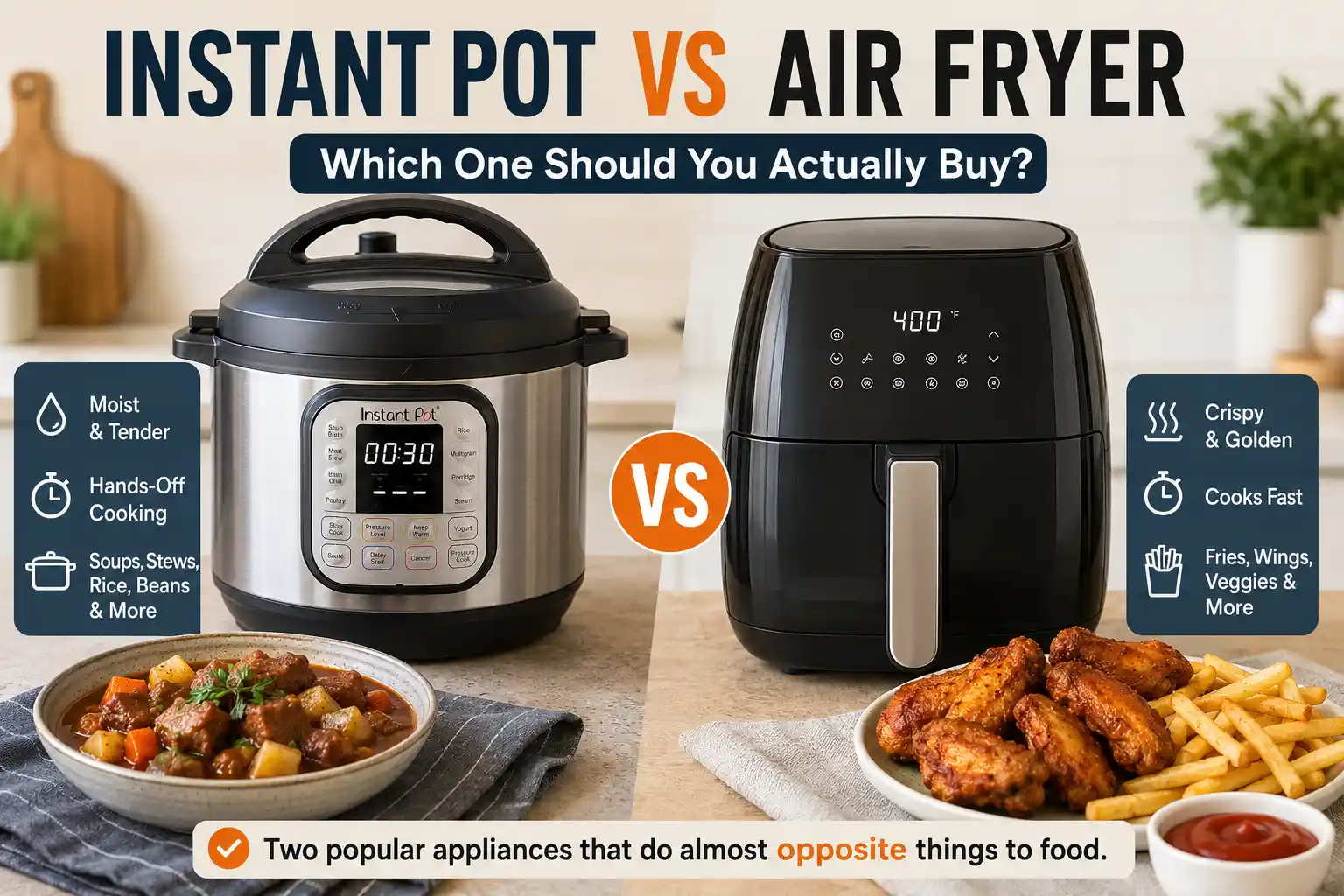
They look similar and both cook fast, but an Instant Pot and an air fryer do almost opposite things to food. One pressure-cooks moist dishes; the other crisps with hot air. Here's which one fits your kitchen - or whether you need both.
The first time someone sees an Instant Pot and an air fryer side by side, they look like the same kind of thing - two bulky countertop appliances that promise fast, easy cooking.
But they do almost opposite things to food. One traps moisture and pressure to make things tender and saucy. The other blasts hot air to make things crispy and dry. Confusing them leads to disappointment - you can't make crispy wings in an Instant Pot, and you can't make beef stew in an air fryer.
Since we largely cover air fryers here, this comparison is for the person trying to decide which to buy first, or whether they need both. I pulled together information from Tom's Guide, Best Buy's appliance guides, and several hands-on comparisons. Here's the honest breakdown of what each does, where each fails, and which fits your kitchen.
The fundamental difference
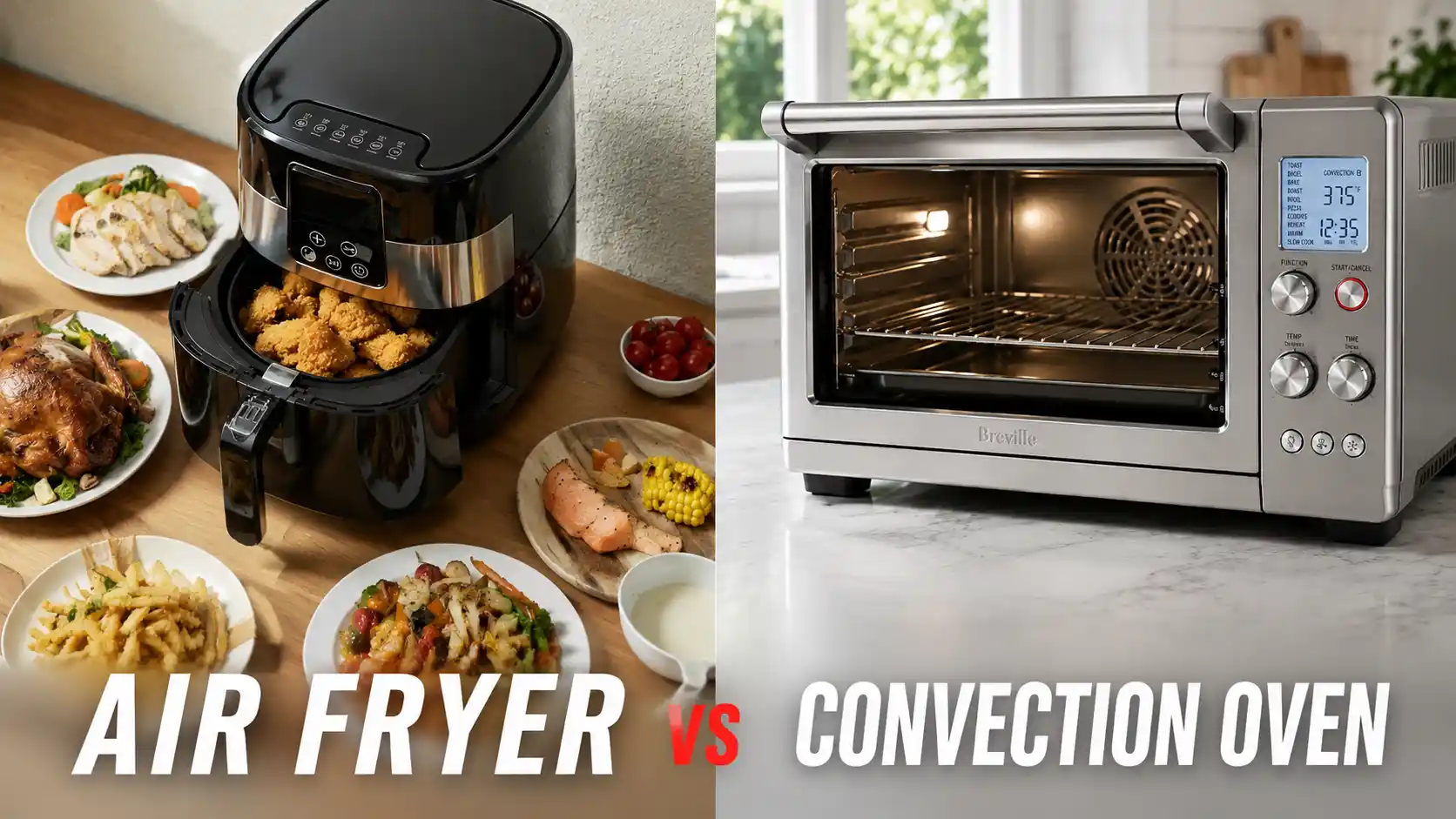
An air fryer is essentially a small convection oven. A heating element and a powerful fan circulate hot air around food, crisping and browning the surface with little or no oil. It makes things dry and crispy. (We explain this fully in our air fryer vs convection oven guide.)
An Instant Pot is an electric pressure cooker. It seals food with liquid inside a locked pot, builds up steam pressure, and cooks food fast in a moist, high-pressure environment. It makes things tender and moist.
That's the whole distinction, and everything else follows from it. The air fryer removes moisture to crisp; the Instant Pot adds moisture and pressure to tenderize. They're not really competitors - they're opposites that happen to look alike.
What the air fryer does best
The air fryer wins for anything you want crispy.
Frozen foods (fries, nuggets, wings) come out crispier than an oven, faster, with no oil. Fresh proteins like chicken breasts and pork chops get a browned exterior while staying juicy. Roasted vegetables develop caramelized, crispy edges. Reheated leftovers - especially pizza and fried foods - get their texture back instead of going soggy like in a microwave.
It's also fast and low-effort for daily cooking. Preheats in 2-3 minutes, cooks most things in 10-25 minutes, and the basket usually goes in the dishwasher.
What it can't do: anything wet. No soups, no stews, no rice, no beans, no braised dishes. If a recipe involves a lot of liquid, the air fryer is the wrong tool.
What the Instant Pot does best
The Instant Pot wins for moist, hands-off cooking - and for replacing several appliances at once.
Tough cuts of meat that would need hours in the oven are done in about 45 minutes under pressure. Dried beans cook without overnight soaking. Soups, stews, chili, and curries come together fast. Rice, steamed vegetables, and even yogurt are all within its range. The Instant Pot can pressure cook, slow cook, sauté, steam, and make rice - replacing a pressure cooker, slow cooker, rice cooker, and steamer in one unit.
It's also the more hands-off appliance. Add ingredients, seal the lid, set the time, and walk away. No shaking baskets or flipping food halfway.
What it can't do: crisp or brown anything. Pressure cooking is a moist-heat method, so food comes out tender but never crispy. You can't make fries or get crispy skin on chicken in a standard Instant Pot.
Side by side
The practical contrast, food by food:
Crispy fries or wings: Air fryer, easily. The Instant Pot can't crisp.
Beef stew or pulled pork: Instant Pot, easily. The air fryer can't handle the liquid.
Rice and beans: Instant Pot. Not an air fryer task at all.
Roasted vegetables: Air fryer for crispy edges; Instant Pot for soft steamed.
Reheating leftovers: Air fryer for anything you want crispy; Instant Pot rarely used for this.
Tough, cheap cuts of meat: Instant Pot to tenderize fast.
Weeknight chicken breast: Either, but air fryer gives better texture.
Hands-off "set and forget" cooking: Instant Pot.
Which should you buy first?
If you can only get one, here's the honest decision based on how you actually eat.
Buy the air fryer first if: your household eats a lot of proteins, frozen foods, and reheated leftovers. It handles more everyday quick-cooking tasks and delivers crispy results nothing else matches at that speed. For most small households that want fast weeknight dinners, the air fryer gets used more often.
Buy the Instant Pot first if: you cook a lot of soups, stews, beans, rice, curries, or tough cuts of meat, and you value hands-off cooking where you set it and walk away. If you batch-cook or meal-prep moist dishes, the Instant Pot earns its place daily.
The deciding question is simple: do you crave crispy food, or do you cook a lot of moist, slow-style dishes? Your honest answer points to the right first purchase.
Do you need both?
Many households end up with both, and it makes sense - they cover opposite cooking styles. The Instant Pot handles the stews, rice, and tough meats; the air fryer handles the crispy proteins, fries, and reheating. Together they cover almost everything except baking.
You'd want both if you cook genuinely varied meals - moist comfort food some nights, crispy quick dinners others - and you have the counter space.
You don't need both if your cooking leans heavily one way, or if counter space and budget are tight. In that case, pick the one that matches your most common meals.
The combo option
There's a middle path: combo units like the Instant Pot Duo Crisp, which includes both a pressure-cooking lid and an air-frying lid.
These work reasonably for both functions and save counter space. The trade-off is that they don't quite match a dedicated air fryer's crisping or a standalone pressure cooker's capacity and simplicity. The air fry lid is an extra piece to store, and swapping lids adds a step.
For tight kitchens where you want both capabilities and can accept slightly-less-than-best at each, the combo is a sensible compromise. For people who care most about one function, a dedicated appliance does that job better.
A note on coatings, for the health-conscious
Both appliances have a coating consideration worth knowing. Budget air fryers typically use PTFE-based nonstick baskets, and some Instant Pot models offer nonstick inner pots - the same PFAS concern applies to both.
The good news: PFAS-free options exist in both categories. Stainless steel inner pots are standard on most Instant Pot models, and ceramic-coated or stainless air fryer baskets are widely available. If non-toxic materials matter to you, check the cooking surface before buying either. Our non-toxic air fryer guide covers how to evaluate these claims.
The bottom line
An Instant Pot and an air fryer aren't really competitors - they're opposites. The air fryer crisps and browns with hot air; the Instant Pot tenderizes and cooks moist dishes with pressure. Neither can do the other's job.
For most people who want crispy food and fast weeknight cooking, the air fryer is the better first buy. For people who cook a lot of stews, beans, rice, and tough meats, the Instant Pot earns its place. And plenty of kitchens benefit from both, since they cover opposite ends of how we cook.
Figure out what you actually make most often, and the choice makes itself.
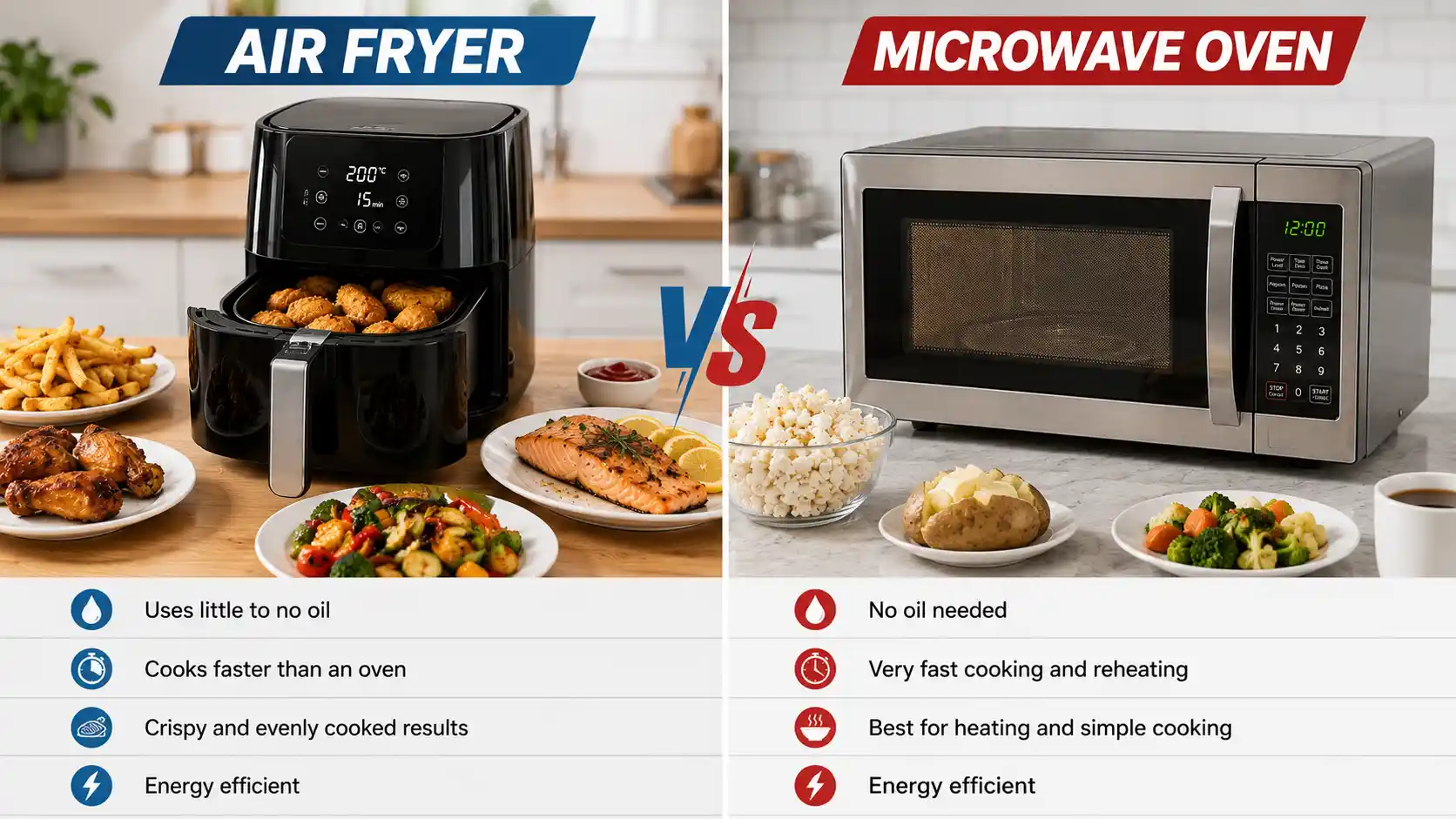
For more on air fryers specifically, our complete guide to air fryers covers everything. For how air fryers compare to other appliances, see our air fryer vs convection oven guide and air fryer vs microwave guide.
Sources and further reading
The information in this article is based on the following sources:
- Tom's Guide - "Instant Pot vs air fryer: which should you buy?"
- Best Buy - "Instant Pot Vs. Air Fryer: Which Option is Best for Me?"
- Kim Schob - "Air Fryer vs. Instant Pot: Which One Should You Buy?"
Prices and model features change frequently. Always verify current specifications and pricing on the retailer's or manufacturer's website before buying.
They cook in opposite ways. An Instant Pot is a pressure cooker that uses steam and trapped pressure to cook moist foods fast - soups, stews, rice, beans, tough meats. An air fryer uses circulating hot air to crisp and brown food with little oil - fries, wings, roasted vegetables. The Instant Pot makes things tender and moist; the air fryer makes things crispy and dry.
The Instant Pot is more versatile in terms of functions - it can pressure cook, slow cook, sauté, steam, make rice, and even make yogurt, replacing several appliances. The air fryer does one thing (crisp with hot air) but does it better than anything else. If you want one appliance that does many cooking methods, the Instant Pot wins on versatility.
Buy the air fryer first if your household eats a lot of proteins, frozen foods, and reheated leftovers - it handles daily quick cooking and delivers crispiness nothing else matches at that speed. Buy the Instant Pot first if you cook a lot of soups, stews, beans, rice, or tough cuts of meat, and value hands-off set-and-walk-away cooking.
Some Instant Pot models come with an air fryer lid attachment that adds crisping capability, and the Instant Pot Duo Crisp is designed as a combo unit. These work reasonably for both functions but don't match a dedicated air fryer's crisping or a standalone pressure cooker's capacity. They're a space-saving compromise, not best-in-class at either job.
Many households end up with both because they do complementary jobs - the Instant Pot for moist, hands-off cooking (stews, rice, beans) and the air fryer for crispy, fast cooking (fries, wings, proteins). If you have the counter space and cook varied meals, both is genuinely useful. If space or budget is tight, pick based on how you actually cook most often.
Both support healthy cooking in different ways. Air fryers use little to no oil, reducing fat compared to deep frying. Instant Pots use pressure cooking, which preserves more nutrients than boiling and requires no added fat. Neither is universally healthier - it depends on what you cook. Both beat deep frying and long stovetop boiling.
Both are more energy-efficient than a conventional oven or stovetop because they cook faster in a contained space. The Instant Pot is very efficient for long-cooking dishes (a stew that would simmer for hours on the stove). The air fryer is efficient for quick crisping. Per meal, both cost only a few cents to run.
It depends on your cooking. The Instant Pot replaces more appliances (pressure cooker, slow cooker, rice cooker, steamer), so it consolidates better if you cook varied moist dishes. The air fryer is often more compact and is better if you mainly want crispy food. For the tightest spaces, a combo unit like the Instant Pot Duo Crisp covers both at some performance cost.