Table of Contents
AI Summary
How to Build a High-Protein Ninja Creami Base
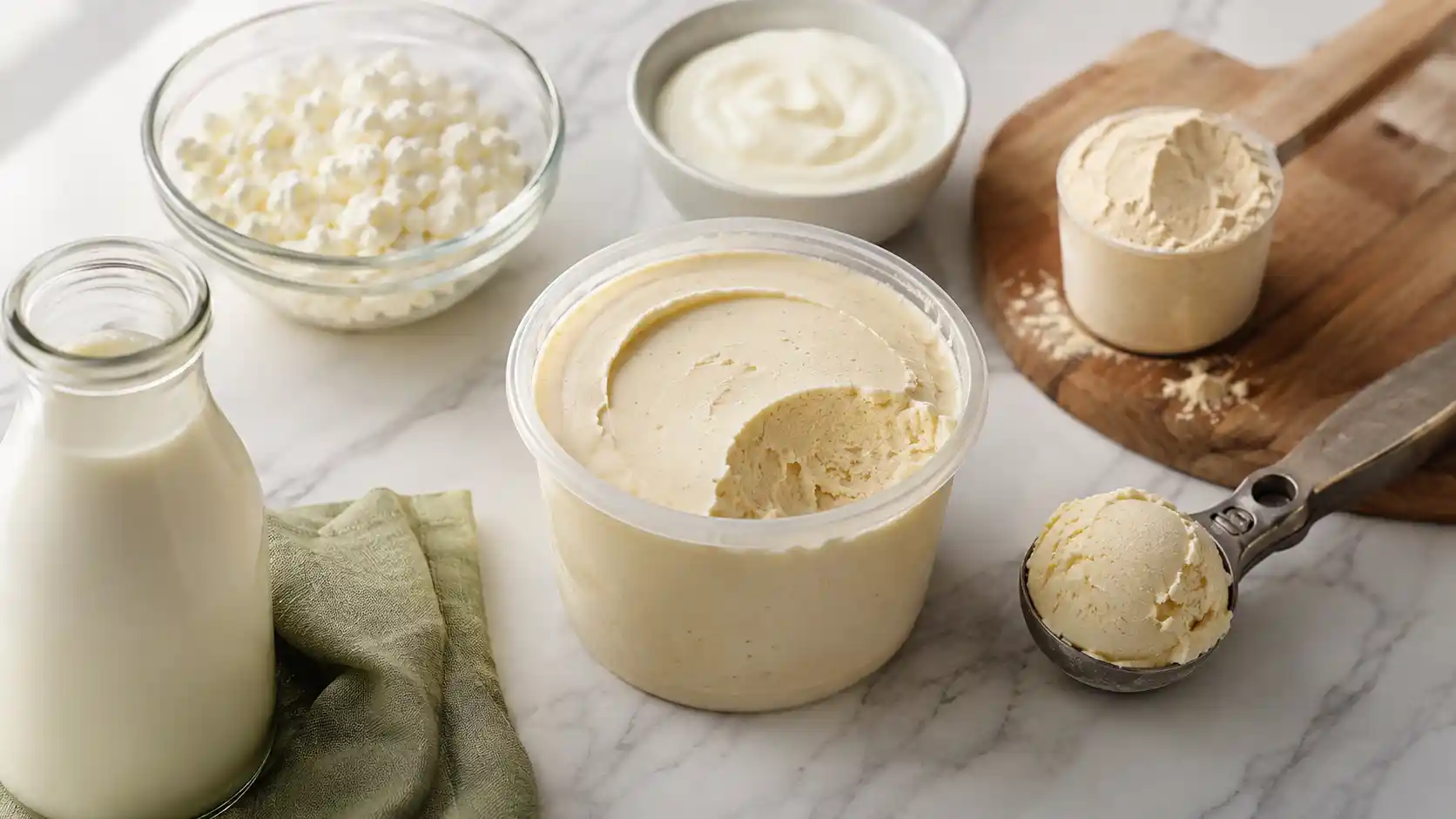
Most high-protein Creami content gives you one fixed recipe. Here's how the ingredients actually work together, so you can build your own base with whatever protein source and flavor you have on hand.
Search "high protein Ninja Creami" and you'll find hundreds of individual recipes, each with a specific flavor and exact measurements. What's less commonly explained is how the ingredients actually function together - which is more useful once you understand it, because it means you can build your own base with whatever you have in the fridge instead of needing a new recipe for every flavor.
Here are the building blocks, what each one does, and how to troubleshoot the most common problem (icy or crumbly texture) without following anyone else's exact recipe.
The four building blocks
Every good high-protein Creami base is built from four functional categories, even though the specific ingredients vary a lot between recipes.
A protein source. This is the foundation and where most of the protein count comes from. The most common options are cottage cheese, Greek yogurt, high-protein milk (like Fairlife), and protein powder - frequently two of these combined rather than just one.
A liquid base. Regular milk, almond milk, or another milk alternative, used to thin the mixture to a blendable, pourable consistency before freezing.
A stabilizer (optional but recommended). Sugar-free pudding mix, xanthan gum, or guar gum in small amounts. This is what most separates a smooth, scoopable result from an icy, crumbly one - more on why below.
Sweetener and flavor. Vanilla extract, a bit of maple syrup or honey, cocoa powder, or flavored protein powder itself, depending on what you're making.
Understanding these four categories means you can swap ingredients within each category based on what you have, rather than needing an exact recipe.
Choosing your protein source
Cottage cheese is one of the most recommended options because it blends completely smooth in a blender (you genuinely can't taste or feel the curds once processed) and packs a meaningful amount of protein - commonly cited in the range of 25-35+ grams per pint depending on quantity used. Low-fat or 2% works better for texture than fat-free, since a little fat helps creaminess.
Greek yogurt works similarly, with a slightly tangier flavor than cottage cheese. It's a reasonable substitute if you don't keep cottage cheese on hand.
High-protein milk (like Fairlife) is the simplest option - minimal prep, just freeze and process - though it generally provides somewhat less protein per pint than a cottage cheese or yogurt-based mixture unless you're also adding protein powder.
Protein powder is commonly added on top of one of the above rather than used alone. Whey or whey-blend powders tend to blend smoother than plant-based ones and produce a creamier final texture. Using protein powder as your only protein source (with no cottage cheese, yogurt, or high-protein milk) tends to result in a chalkier texture, since it lacks the fat and body those other sources provide.
Why texture problems happen (and the fix)
This is the single most common frustration with high-protein bases: they come out icy, crumbly, or unevenly processed instead of smooth.
The reason is straightforward. Traditional ice cream gets its smooth texture partly from fat and sugar - both of which slow ice crystal formation and keep the mixture soft even when frozen. High-protein bases are, by design, lower in both, which means the frozen block is harder and shaves less smoothly.
Two fixes address this directly:
Add a stabilizer. A tablespoon or two of sugar-free instant pudding mix, or a small pinch (roughly a quarter to half teaspoon) of xanthan or guar gum, compensates for the reduced fat and sugar. Start on the low end with gum-based stabilizers - they thicken more than expected as you add more.
Use the Re-Spin function. If the first process leaves the texture crumbly or icy rather than smooth, running Re-Spin (sometimes with a small splash of milk added first) usually resolves it. This is a normal, expected step for leaner bases, not a sign of a mistake.
A little extra fat also helps - regular milk or yogurt instead of the fat-free versions gives a noticeably creamier result for a small calorie trade-off.
The freezing step (same rule as always)
Whatever base you build, it needs the same full freeze as any Creami base: 24 hours, poured into the pint container below the max fill line, sealed and frozen flat. Shortcutting this risks the same partial-freeze problems covered in our complete guide to the Ninja Creami.
Putting it together: a starting framework
Rather than a single fixed recipe, here's the general framework most successful high-protein bases follow, which you can adapt to what you have:
A cup or so of your primary protein source (cottage cheese, Greek yogurt, or high-protein milk), blended completely smooth with a bit of regular milk to reach a pourable consistency. Optionally, one scoop of protein powder for an extra protein boost. A small amount of stabilizer (sugar-free pudding mix or a pinch of xanthan/guar gum) if you want maximum smoothness. Vanilla extract or your chosen flavoring, and a touch of sweetener if the base needs it after tasting. Blend everything until completely smooth - any lumps left in the base will show up in the final texture - then freeze for 24 hours before processing.
From there, flavor variations (chocolate, fruit, cookie mix-ins) are just additions to this same basic structure, not a reason to start over with a completely different approach.
Storage and leftovers
Store any leftover base in the sealed Creami pint for up to about 1-2 weeks. It will refreeze solid between servings, so expect to re-spin (often with a small splash of milk) each time before eating, rather than finding it scoopable straight from the freezer days later.
Sources and further reading
The information in this article is based on general principles synthesized from multiple recipe developers and Creami guides, including:
- Kroll's Korner - "Cottage Cheese Ice Cream (Ninja Creami) High Protein!"
- Choosing Chia - "High Protein Ninja Creami Cookies and Cream"
- Secretly Healthy Home - "The Best Ninja Creami Recipes (High Protein + Easy!)"
- Lifestyle of a Foodie - "Ninja Creami Protein Ice Cream (36g Protein!)"
- Hayl's Kitchen - "The Best Ninja Creami Vanilla Protein Ice Cream Base (That's Actually Creamy!)"
This is a general technique guide, not a single fixed recipe - proportions and specific ingredients will vary based on what you use and your desired protein target. For exact measurements and flavor-specific recipes, many dedicated Creami recipe creators publish detailed recipe cards you can search for directly.
Cottage cheese and Greek yogurt are the two most commonly recommended whole-food sources, since they blend completely smooth and add both protein and creaminess. Ready-made high-protein milk (like Fairlife) is the simplest option, requiring almost no prep. Protein powder is often added on top of one of these bases to boost the total protein further, rather than used as the sole protein source.
One scoop (roughly 20-30 grams, depending on the brand) is the common range for a single pint. Whey or whey-blend powders are generally recommended over plant-based ones, since they tend to blend smoother and produce a creamier processed texture. Using protein powder as the only protein source (without cottage cheese, yogurt, or milk) tends to produce a chalkier, less creamy result.
This is the most common problem, and it comes down to insufficient fat and stabilizer in the base. Very low-fat, low-sugar bases freeze harder and shave less smoothly. The fix is adding a stabilizer (sugar-free pudding mix, xanthan gum, or guar gum in small amounts), a little more fat (regular milk or yogurt instead of the fat-free versions), and using the Re-Spin function after the first process if it still looks crumbly.
Re-Spin runs the processing cycle again on a batch that already went through once. Use it when the first spin leaves the texture crumbly, icy, or unevenly processed rather than smooth. It's a normal, expected step for many high-protein bases (which are lower in fat and sugar than traditional ice cream, both of which normally help smoothness), not a sign something went wrong.
It helps, especially for leaner, higher-protein bases. Traditional ice cream gets its smooth texture partly from fat and sugar, both of which are reduced in high-protein versions. A small amount of sugar-free pudding mix or a pinch of xanthan or guar gum compensates for that, giving a smoother, less icy result. It's not strictly required, but most experienced Creami users recommend it for protein-forward bases.
Yes. Cottage cheese, Greek yogurt, and high-protein milk (like Fairlife) all provide substantial protein on their own, often 25-35+ grams per pint depending on quantities used. Protein powder is a common addition to push the total higher, but it's not the only path to a high-protein result - useful if you don't keep protein powder on hand or prefer a whole-food-only base.
About 1-2 weeks stored in the sealed Creami pint container. It will refreeze solid between uses, so you'll need to re-spin (and often add a splash of milk) each time before eating leftovers, rather than expecting it to stay scoopable straight out of the freezer.
Yes. Full-fat coconut milk or coconut yogurt are common dairy-free substitutes, though they generally provide less protein than cottage cheese or Greek yogurt, so you may want to lean more heavily on a dairy-free protein powder to compensate for the total protein count.