Table of Contents
AI Summary
Why Does My Air Fryer Smell Like Plastic? (And How to Make It Stop)
If your air fryer smells like burning plastic, you're not alone - and you're probably not in danger. Here's exactly why it happens, the specific fix that actually works, and when the smell means something is genuinely wrong.
The first time I plugged in my air fryer, I thought it was broken.
The smell that came out of it was somewhere between melting electrical insulation and a brand new pool floatie left in the sun. The kitchen filled with it within two minutes. I unplugged the unit, opened a window, and Googled "air fryer plastic smell new" while standing on the balcony. It turns out this is one of the most common air fryer experiences, and nearly everyone googles this exact phrase at some point during their first week of ownership.
Here is the thing nobody tells you upfront. The plastic smell is normal, mostly. It will go away if you handle it correctly. But there is also a small percentage of cases where it does not go away, and those mean something different is wrong. Knowing the difference matters.
This guide walks through what's actually happening, the specific method that gets rid of the smell, and when you should stop trying and return the unit.
Why brand new air fryers smell like plastic
The exterior housing and interior drawer of most air fryers are made of heat-resistant plastic, and the basket and crisper plate are coated with PTFE (the non-stick material commonly known as Teflon).
Here is the thing the marketing doesn't tell you. When plastic is injection-molded at the factory, it goes through one heat cycle. After that, the unit gets boxed up and shipped. The first time you turn it on at home, the plastic is reaching high cooking temperatures for the second time in its life. The first few heat-and-cool cycles cause the plastic to "off-gas" - release small amounts of residual manufacturing compounds. That off-gassing is what you smell.
This isn't an air fryer-specific thing. New ovens do it. New kettles do it. New space heaters do it. Anything with plastic components that hits high temperatures for the first time will smell weird for a while. Air fryers just happen to be small enough that the smell concentrates in a way large ovens don't.
The PTFE coating on the basket also contributes. PTFE is chemically stable below 500°F and most air fryers cap out at 400°F, so it stays safe at normal cooking temperatures. But the first few times it heats up, it releases trace amounts of compounds that smell faintly chemical. After a few cycles, this stops.
The third source nobody mentions is dust. Air fryers sit in warehouses and stores for weeks or months before they reach you. Dust accumulates on the heating element. The first time you turn the unit on, that dust burns off, contributing to the initial smell.
All of this is normal. None of it is dangerous at the temperatures involved. But you also don't want to cook food in it until the smell is gone, because the food will absorb that plastic taste.
The break-in process that actually works
The technique that consistently works comes up across multiple manufacturer guides - Philips, Cosori, Hamilton Beach, and Uber Appliance all recommend variations of the same process. Here is the version that combines what each one suggests.
Take the air fryer out of the box. Remove all packaging, including any plastic films or wrappers around the basket, the heating element, or inside the drawer. This sounds obvious, but a surprising number of people miss a piece of plastic film that's stuck somewhere - usually around the heating element at the top. That plastic will melt and smell terrible during the first heat cycle.
Take out the basket and crisper plate. Wash them in warm, soapy water. Use a soft sponge. Rinse thoroughly. Dry completely.
Wipe the inside of the cavity with a damp cloth and mild dish soap. This removes any manufacturing residue from the interior walls. Don't get water near the heating element - just wipe what you can reach safely. Dry the inside afterward.
Put the basket and plate back into the unit. Make sure everything is fully dry.
Plug the air fryer in. Set the temperature to its maximum (usually 400°F) and run it empty for 15-20 minutes. Open a window or run a ventilation fan during this. The unit will smell strongly during this cycle. That's the point - it's burning off the off-gassing materials.
When the timer ends, don't open it immediately. Let it cool for 15 minutes with the basket inside.
Repeat this empty-run process 3-4 times total, with cool-down time between each cycle. By the third or fourth run, the smell should be largely gone.
This process takes about an hour and a half total, including the cool-down between cycles. It's annoying but it's the single most effective method.
If the smell is still there after the break-in
For most people, the standard break-in process eliminates the plastic smell. But if you've done it and you can still smell plastic, here are the next steps.
Try the vinegar-and-water steam method. Put a heat-safe ceramic ramekin or small oven-safe dish in the basket. Fill it with 1/4 cup of water and 1-2 tablespoons of white vinegar. Run the air fryer at 350°F for 10-15 minutes. The vinegar steam neutralizes lingering odors and reaches places water alone can't.
For an alternative, use lemon instead of vinegar. Cut a lemon in half, put it in a bowl with about 1/4 cup of water, and run the air fryer at the same temperature for the same time. The acidity in the lemon serves the same odor-neutralizing function but smells better during the process.
Don't use both vinegar and lemon at the same time - just one or the other.
After either steam treatment, let the unit cool completely. Wipe down the interior again with a damp cloth. Run another empty heat cycle at 400°F for 10 minutes. The combination of acid steam plus a final heat cycle usually handles whatever the standard break-in missed.
When the smell means something is actually wrong
Most plastic smell is harmless and fades. But there are a few situations where the smell indicates a problem you can't fix with the break-in process.
If the smell persists strongly after a full week of regular use, the unit may be defective. Quality control issues in some air fryer batches result in plastic components that off-gas indefinitely. This isn't your fault and it isn't fixable. Return the unit under warranty.
If you can smell plastic in your food after the break-in process, stop using the appliance and contact the manufacturer. Off-gassing should be confined to the air, not transferring into food. If it's getting into food, something is wrong with how the unit is built.
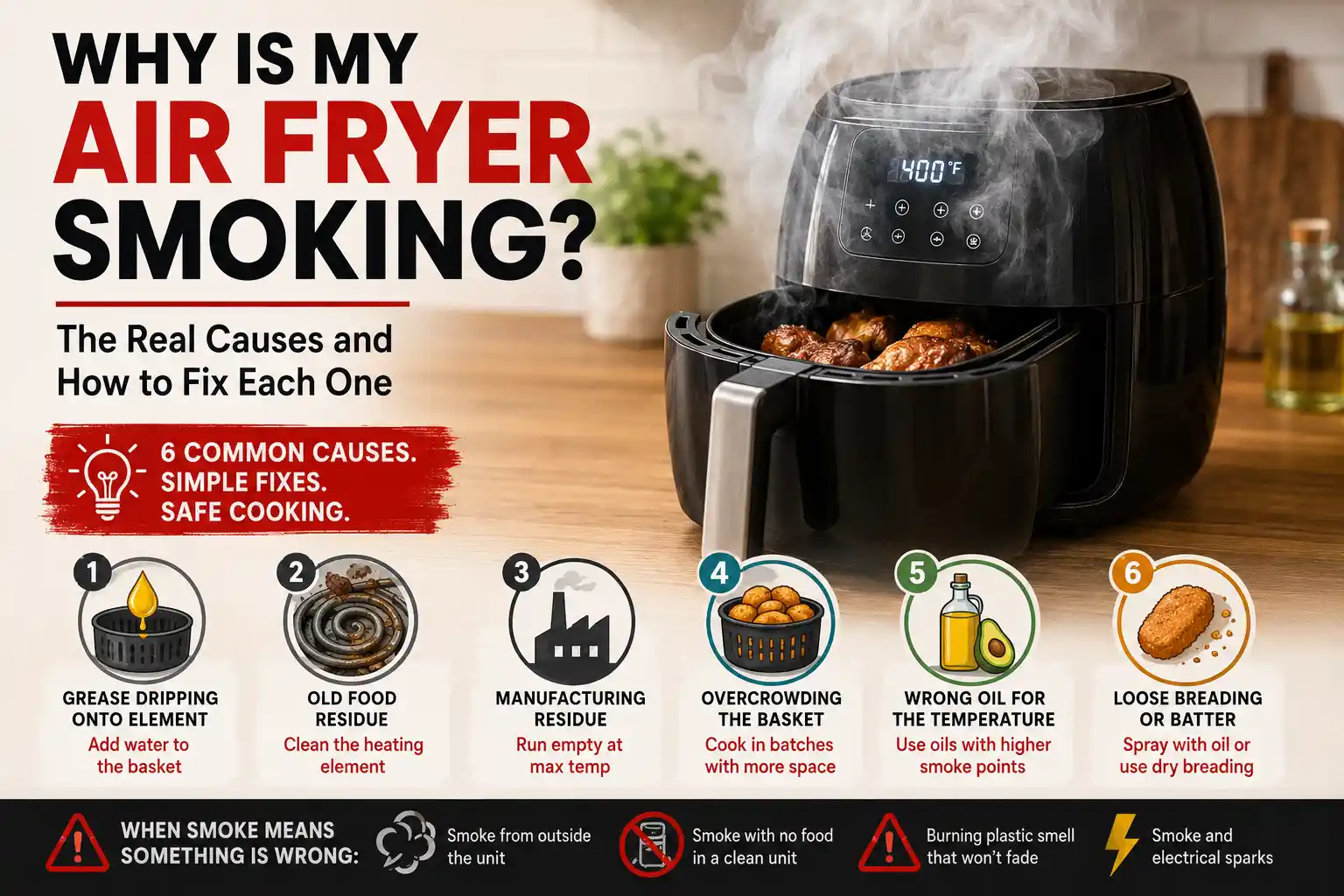
If the smell is accompanied by visible smoke, even small amounts, during normal cooking, that's different from the off-gassing smell. Smoke from an empty unit or during normal use usually indicates an electrical issue or melting component. Unplug immediately and contact the manufacturer.
If a piece of internal plastic is visibly melting or deformed when you look inside, the unit is failing. Stop using it.
If the unit was working fine and suddenly starts smelling like burning plastic after months of use, that's a different problem entirely. This usually means a wire has come loose and is touching plastic somewhere inside the housing. It's a safety issue. Stop using the unit.
The general rule: smell from a brand-new unit during break-in is normal. Smell from an established unit that wasn't smelling before is not normal.
Why some cheap air fryers smell forever
Multiple reviews and Amazon Q&A threads document a recurring problem with budget air fryers - under $40 - where the plastic smell never fully fades, even after extensive break-in cycles.
This is usually because cheaper manufacturing uses lower-grade plastics. The off-gassing properties are different. The materials may contain more residual solvents or use cheaper polymer blends that continue to off-gas for months instead of hours.
There is no fix for this. If you bought a cheap air fryer and the smell hasn't gone away after a week of break-in cycles and regular use, you bought a unit that isn't going to stop smelling. Return it and put the money toward something built with better materials.
For more on what makes a quality air fryer in the first place, our complete guide to air fryers covers what to look for. For people specifically concerned about plastic and PFAS, our non-toxic air fryer guide covers ceramic, stainless steel, and glass alternatives.
The plastic smell that comes back later
Sometimes an air fryer is fine for months and then starts smelling like burning plastic again. This is rarer than the new-unit smell but it does happen.
The most common cause is grease that's seeped into a crack or splattered onto a plastic component and is now burning during cooking. This is fixable.
Unplug the unit and let it cool completely. Pull out the basket and crisper plate. Look carefully at the interior - including the underside of the drawer, the back wall, and the area around the heating element. Look for any plastic surfaces that have grease on them.
Wipe the affected areas with a damp cloth and a small amount of dish soap. Be thorough. Old grease is what produces that burning-plastic smell on units that previously worked fine.
If you can't find any obvious grease, check the heating element. Sometimes plastic film, a stray piece of packaging, or a small food particle has gotten lodged near the element and is slowly melting. This requires careful inspection - flip the unit, shine a flashlight inside, look at the area immediately around the heating element. If you find something, remove it carefully.
In rare cases, a plastic component inside the housing has started to fail from age. Air fryers typically last 4-6 years with daily use. If yours is past that and starting to smell, the materials may be reaching the end of their lifespan. Time for a replacement.
A quick checklist for new air fryer smell
If you just got a new air fryer and it smells like plastic, here's the order of operations:
- Unbox completely. Remove all packaging, including any plastic film stuck inside.
- Wash the basket and crisper plate with warm soapy water. Dry completely.
- Wipe the inside of the cavity with a damp cloth. Dry.
- Run the unit empty at 400°F for 15-20 minutes. Open a window.
- Let it cool for 15 minutes.
- Repeat the empty run 3-4 times total.
- If smell persists, do the vinegar-and-water steam treatment.
- If smell still persists after a week of regular use, return the unit.
Most people only need steps 1-6. The rest is for problem cases.
For most quality air fryers, the smell should fade significantly after 3-4 empty break-in cycles and disappear entirely within a week of regular use. If it lasts longer than that, the unit is either lower-quality manufacturing or genuinely defective.
The smell itself is unpleasant but not dangerous at the temperatures involved (under 500°F). PTFE coatings are chemically stable below this threshold. The off-gassing compounds from new plastic are similar to what you'd encounter with a new oven or new car interior - annoying but not toxic at normal exposure levels.
You shouldn't. The food will absorb the plastic taste, and at minimum it will be unpleasant to eat. Do the break-in cycles first until the smell is mostly gone, then start cooking with simple foods that you don't mind smelling slightly off.
Heat accelerates the off-gassing of residual plastic compounds. The smell may be more noticeable when the room is warm or when the unit has been sitting in a hot environment. Run break-in cycles during cooler times if possible.
Yes, if you have an outdoor outlet. Doing break-in cycles outside or in a garage prevents the smell from concentrating indoors. Some manufacturers explicitly recommend this for the initial cycles.
This usually isn't actually the air fryer plastic smell - it's the food interacting with residual oils on the heating element or basket. Cooking fatty foods on a unit with neglected cleaning produces a burning smell that can resemble plastic. Clean the unit thoroughly and try again.
Baking soda absorbs odors but the smell from a new air fryer comes from off-gassing during heating, not lingering odor molecules. Baking soda inside the unit while it's running won't help. The heat cycles are what actually drive off the smell.
At normal cooking temperatures (under 400°F), PTFE coatings are stable and considered safe by most health agencies. The concerns arise above 500°F or when the coating is scratched or damaged. If you're concerned, ceramic-coated, stainless steel, or glass air fryers are widely available now.
Usually grease has splattered onto a plastic component and is burning during cooking, or a piece of food has gotten lodged near the heating element. Inspect the interior carefully, clean any grease you find, and check around the heating element for stuck debris. If you can't find a cause, the unit may be failing internally.