Table of Contents
AI Summary
How to Reheat Almost Anything in an Air Fryer (Times and Temps by Food)
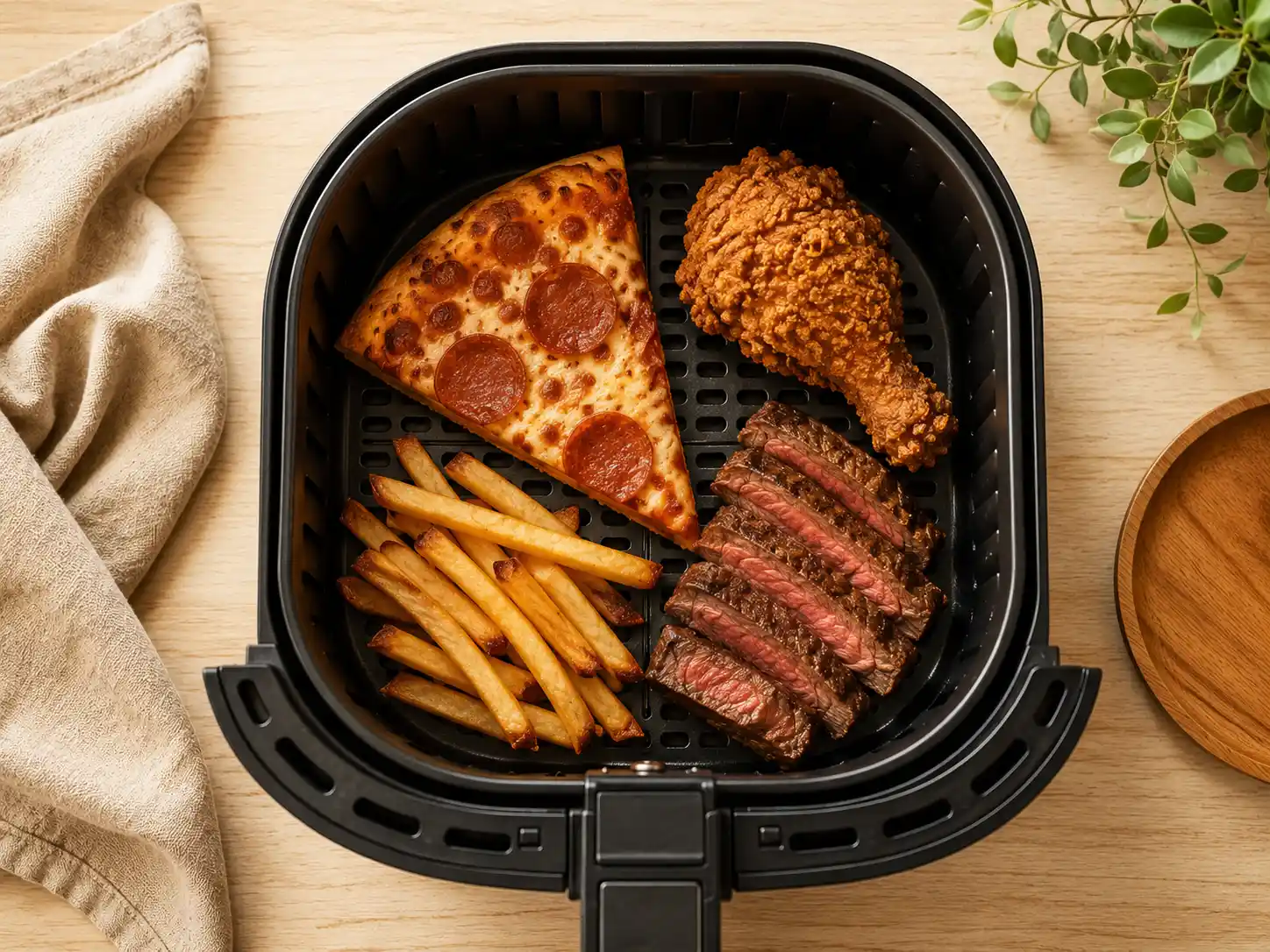
The microwave makes leftovers soggy. The air fryer brings them back to life - crispy pizza crust, re-crisped fried chicken, fries with actual crunch again. Here's the exact temperature and time for every common leftover.
The microwave's biggest failure is texture. It heats using steam, which is exactly wrong for anything that was crispy to begin with - pizza crust goes rubbery, fries go limp, fried chicken skin turns soft and sad.
The air fryer solves this completely. It uses dry, circulating hot air instead of steam, which evaporates surface moisture while heating the food through - restoring crispiness instead of destroying it. It takes a little longer than a microwave (3-8 minutes versus 1-3), but for anything with a crispy element, the quality difference is enormous. Here's the exact temperature and time for the foods people reheat most.
Pizza: 350-360°F, 3-4 minutes
Place slices directly on the basket rack rather than stacking them, so air can reach the crust from underneath. This is what restores the crispy base a microwave can't replicate. Don't stack multiple slices - reheat one layer at a time, in batches if needed.
Fried chicken: 375°F, 5-8 minutes
Boneless tenders on the shorter end (5 minutes), large breast pieces or bone-in thighs on the longer end (7-8 minutes). Let it come toward room temperature for a few minutes before reheating if it's been in the fridge - this helps it heat more evenly.
One thing not to do: don't spray oil on already-fried chicken before reheating. It seems logical but tends to make the crust soggy rather than crisper. The coating should sound audibly crisp when you tap it once it's done.
French fries: 375-400°F, 3-5 minutes
Fries specifically benefit from the higher end of the temperature range. They're mostly water by weight, and a lower temperature takes too long to evaporate that surface moisture, leaving them soft instead of crisp. Shake the basket once partway through. This restores the large majority of their original crunch - a truly dramatic improvement over microwaved fries.
Steak: 300°F, 3-6 minutes
Steak is the one food where lower heat matters most, since the goal is warming through without pushing past your original doneness. 300°F for 3-6 minutes depending on thickness gets there gently.
If the steak is already sliced, reheat it sliced rather than whole - a whole piece concentrates heat in the center and can overcook the edges by the time the middle reaches temperature. Let it rest a couple of minutes after reheating so the juices redistribute.
Chicken breast (plain, not fried): 350-375°F, 3-7 minutes
Preheat, place in the basket, and cook for 3-4 minutes, flipping halfway. If it's not heated through, add another 1-2 minutes. Thicker or bone-in pieces take longer than thin cutlets - check the thickest part reaches 165°F.
Rice, pasta, and other moisture-sensitive leftovers
These need a slightly different approach since air frying can dry them out.
Add a teaspoon or two of water before reheating, and cover loosely with foil for the first portion of the reheat time to trap steam. Remove the foil for the final minute or two if you want any crispy elements (like the top of a casserole) to firm back up. Reheat at around 325-350°F, checking for even heating throughout.
Ribs and saucy dishes
Wrap in foil and brush with extra sauce before reheating - this keeps them from drying out or toughening. Reheat at 350°F for about 6 minutes. You can skip the foil, but expect a slightly tougher result and a messier basket.
The general rule if your food isn't listed above
Most leftovers follow a predictable pattern once you understand the logic:
Thin, crispy leftovers (pizza, fries, nuggets, most fried food): 350-400°F, 3-5 minutes.
Dense or saucy leftovers (casseroles, ribs, mixed dishes): 325-350°F, 5-8 minutes, foil-covered for part of the time.
Delicate proteins where you want to preserve doneness (steak, fish): 300°F, 3-6 minutes.
Preheating the air fryer for 2-3 minutes before adding food produces more consistent results across all of these - the food starts crisping immediately instead of slowly warming up alongside a cooling appliance.
The two-step trick for foods you really care about
For something like restaurant fried chicken or a special leftover pizza where you want it genuinely indistinguishable from fresh, a two-step reheat works better than a single temperature.
Step one: a lower temperature (around 280°F) for a few minutes to bring the interior up to temperature without over-browning the exterior. Step two: a quick blast at higher heat (around 375-380°F) for about a minute to re-crisp the outside. Total time is similar to the single-temperature method, but the result is noticeably better for foods where crispness is the whole point.
Save this for the leftovers you actually care about - the standard single-temperature approach works fine for everyday reheating.
What not to reheat in an air fryer
A few things don't work well with this method.
Leafy salads and raw greens. The circulating hot air wilts them and can turn them bitter. If you have a mixed leftover with greens, reheat the cooked components separately and add cold greens back at the end.
Eggs. Air fryer airflow dries eggs out badly - worse than most other reheating methods. A microwave at reduced power works better specifically for eggs.
Very liquid dishes. Soups, stews, and anything primarily liquid aren't suited to an air fryer at all, reheating or otherwise - stick to a stovetop or microwave for these.
Common mistakes
Overcrowding the basket is the most frequent one. When food is piled on top of itself, hot air can't circulate properly - some pieces end up burnt while others stay cold. Leave space between items and reheat in batches if you have a lot of food.
Skipping the internal temperature check on meat and poultry is another. Per USDA guidance, reheated meat, poultry, rice dishes, casseroles, and mixed leftovers should reach 165°F throughout. An instant-read thermometer removes the guesswork, especially for thicker pieces.
The bottom line
The air fryer is genuinely the best home method for reheating anything that was originally crispy or wanted a specific texture - pizza, fried chicken, and fries all come back dramatically better than a microwave produces, at the cost of a few extra minutes.
Match the temperature to the food: high heat (375-400°F) for crispy things, moderate (325-350°F) for dense or saucy dishes, low (300°F) for proteins where you want to preserve doneness. Preheat briefly, don't overcrowd the basket, and check that meat and poultry hit 165°F.
For more on air fryer cooking guides, our salmon guide and hot dogs guide use the same approach for cooking from scratch. For general troubleshooting, our cleaning guide helps keep your basket in good shape between all this reheating.
Sources and further reading
The information in this article is based on the following sources:
- The Foodie Physician - "How To Reheat Food in an Air Fryer"
- Samsung Food - "Reheating in an Air Fryer: Chicken, Fries, Pizza, Steak, and More"
- AirFryerJourny - "Air Fryer Leftover Reheat Guide"
- Air Fryer Calculator - "Air Fryer Reheating Guide: Times and Temps for Every Food"
- U.S. Department of Agriculture - Safe reheating temperature guidance (165°F)
Times are approximate and vary by air fryer model, portion size, and starting temperature (refrigerated versus room temperature). Always check that meat, poultry, and mixed dishes reach 165°F internally before eating.
A microwave heats food using steam, which makes crispy foods go soggy - limp fries, rubbery pizza crust, soft fried chicken skin. An air fryer uses dry, circulating hot air, which evaporates surface moisture while heating the food through, restoring crispiness rather than destroying it. It takes a bit longer (3-8 minutes versus 1-3 in a microwave), but the texture difference is substantial.
350-360°F for 3-4 minutes. Place slices directly on the basket rack rather than stacking them, so air can circulate around the crust. This restores a crispy base that a microwave can't replicate. Avoid stacking slices - reheat one layer at a time for best results.
375°F for 5-8 minutes, depending on the piece size - boneless tenders on the shorter end, large breast pieces or thighs on the longer end. Don't spray oil on already-fried chicken; it tends to make the crust soggy rather than crisper. The coating should sound audibly crisp when tapped when it's done.
300°F for 3-6 minutes, depending on thickness, which preserves the original doneness better than higher heat would. Slicing the steak before reheating (if it's already sliced) helps it heat more evenly - a whole piece can overcook at the edges by the time the center comes up to temperature. Let it rest a couple of minutes after reheating.
375-400°F for 3-5 minutes, shaking the basket once partway through. The higher temperature matters here - fries are mostly water by weight, and a lower temperature takes too long to evaporate that surface moisture, leaving them soft instead of crisp. This restores the large majority of their original crunch.
It helps. Preheating for about 2-3 minutes means the food starts crisping immediately rather than slowly coming up to temperature in a cooling appliance. It's not strictly mandatory, but it produces more consistent results, especially for anything you want genuinely crispy.
Leafy salads and raw greens wilt and turn bitter in the airflow - reheat any cooked components separately and add greens back cold. Eggs also reheat poorly in an air fryer, drying out in the circulating air; a microwave at low power works better for eggs specifically. Very liquid dishes like soup don't work in an air fryer at all.
Per USDA guidance, reheated leftovers - meat, poultry, rice dishes, casseroles, and mixed leftovers - should reach 165°F all the way through. An instant-read thermometer is the reliable way to confirm this, especially for thicker cuts of meat where the center takes longest to heat.